guide · 9 min read
How should you visit Okinawa's utaki, gusuku and war memorials?
Okinawa's utaki and gusuku are working places of prayer and its Battle of Okinawa memorials are places of mourning, and Sefa-utaki and Kudaka-jima publish their own rules for the people who come to see them.
By Ride Okinawa · Updated 2026-10
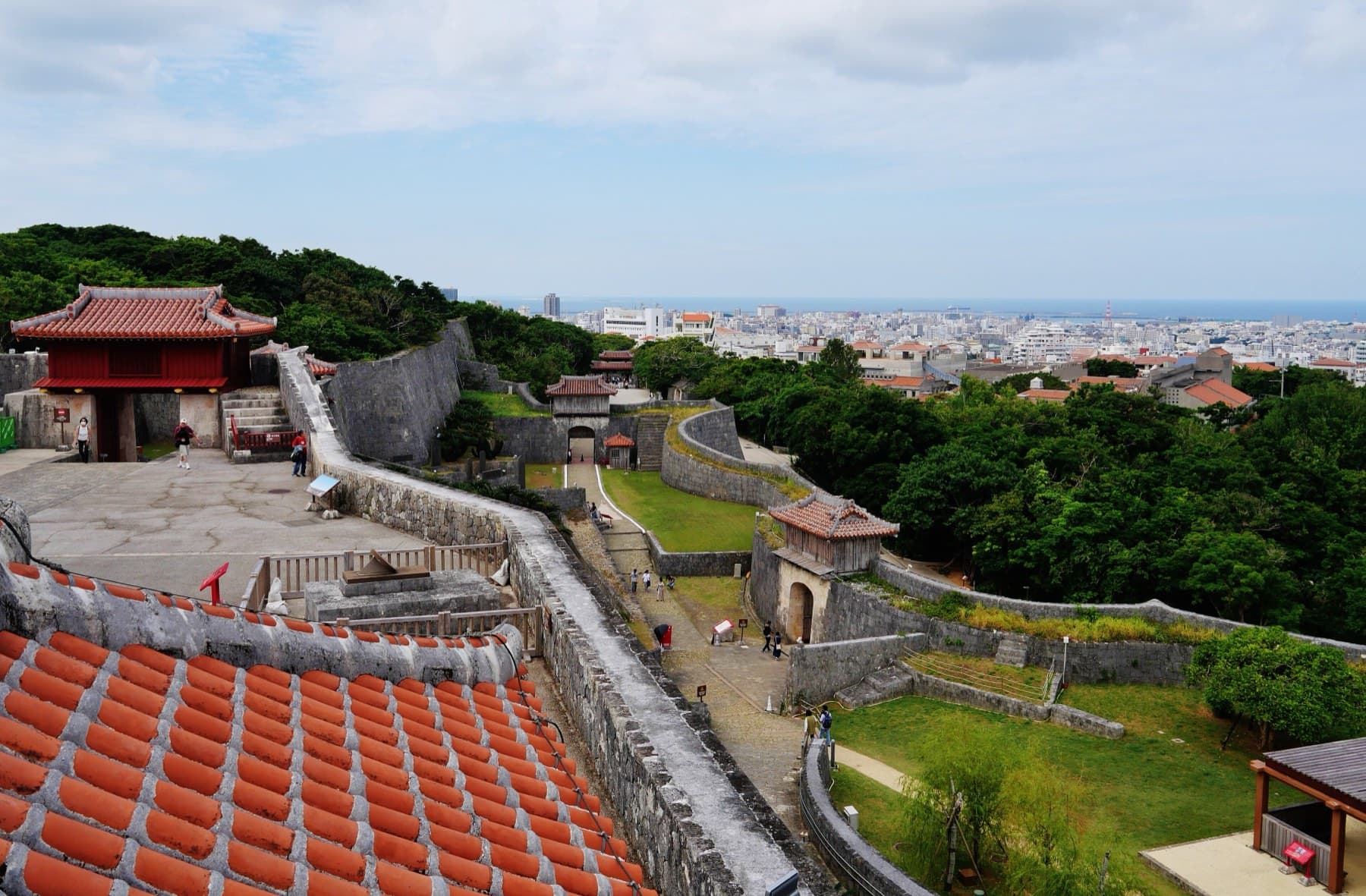
Visit them as you would any place of worship. An utaki (御嶽) is a sacred grove or prayer site of Ryukyuan religion, and many gusuku castles hold utaki inside their walls. Families still come to the memorials of the Battle of Okinawa to mourn. Speak quietly, dress modestly and stay behind the fences and off the stonework. Leave every stone, shell and offering where you find it, and keep people at prayer out of your photographs. Sefa-utaki in Nanjo sells tickets at ¥600 for adults from 1 October 2026, fences off its inner prayer space and closes to everyone for three days at the start of the fifth and tenth lunar months. On Kudaka-jima, Fubo-utaki is closed all year and the islanders ask you to swim only at Meegi beach.
We started from the sites' own rules, from Nanjo City and Kudaka's notice to visitors to Naha City, the castle councils and the Okinawa Prefectural Peace Memorial Museum, and we name Japanese Wikipedia where it fills in history. Everything was read in October 2026.
What does each place ask of you?
| Place | What it is | Entry | The rules that matter most |
|---|---|---|---|
| Sefa-utaki, Nanjo | The Ryukyu Kingdom's most sacred utaki | ¥600 from 1 October 2026, tickets at the Nanjo City Regional Products Center | Nobody passes the fence at Sangui; no food or drink; cameras down |
| Kudaka-jima | The island of Ryukyu's creation story | Boat from Azama port, 15–25 minutes | Fubo-utaki closed all year; take nothing away; swim only at Meegi beach |
| Sonohyan-utaki Stone Gate, Shuri | The kings' prayer gate of 1519 | Free, inside Shuri Castle Park | Wait for anyone praying to finish; keep off the stonework |
| Nakagusuku Castle | A gusuku with eight prayer sites | ¥500 | No bicycles in the grounds; keep a distance from the prayer sites |
| Katsuren Castle, Uruma | Amawari's hilltop fortress | ¥850 with the museum | Bicycles stay in the car park; the utaki at the top is a place of worship |
| Nakijin Castle, Motobu | The Hokuzan kings' stronghold | ¥1,000 | No eating or drinking inside the walls; leave people at prayer unphotographed |
| Okinawa Peace Memorial Park, Itoman | Where the battle's organized fighting ended | Park free; museum ¥300 | No photography in the museum's permanent galleries; stay off the inscribed stones |
What is an utaki?
Utaki are the sacred sites of Ryukyuan religion. Many hold an ibi stone at the centre that marks where a god came down, and women serve the gods there; under the kingdom men were barred outright, and many utaki still let men go only so far (Japanese Wikipedia). On Miyako the word is suku, and in Yaeyama the sites go by on, ugan or wan. Village priestesses called noro served them and answered to the Kikoe-okimi, the kingdom's high priestess. The torii you see at some utaki arrived with Meiji-era Japanization. An utaki can be a forest, a rock, a cave or a low stone gate, so treat a quiet clearing with an incense burner as somebody's altar.
How do you visit Sefa-utaki?
Sefa-utaki appears in the kingdom's founding legend, and six prayer spaces called ibi lie inside its forest. The kings came here to pray for the realm and its harvests, and the court spread white sand carried from Kudaka on the ground for state rites. Here each new Kikoe-okimi took on the power of the gods in the Oaraori rite, and fifteen of them were installed between 1470 and 1875. UNESCO listed the site in 2000 with eight other Ryukyu properties and counted the prayers that still go on here as part of its value (Nanjo City).
Buy tickets at the Nanjo City Regional Products Center, then walk about 500–600 m uphill to the entrance. Adults pay ¥600 from 1 October 2026, up from ¥300. From November to February the site opens 9:00–17:30 and sells its last tickets at 16:45. Nanjo began closing it for rest days in fiscal 2012 to give the worship quiet and let the forest recover, and on those days nobody enters, worshippers included. They fall on the first to third days of the fifth and tenth lunar months, which were 15–17 June in 2026. Conservation work closes the inner sites past the Ujoguchi gate from 2 November 2026 to 5 January 2027, and entry is free during that time.
The city's own rules are short and plain (visitor guidance). Keep your shoulders, back and stomach covered, and skip miniskirts, shorts and camisoles. Nobody may go beyond the entrance to Sangui, the great split rock, and Japanese Wikipedia dates that closure to the theft of an incense burner in 2021. Plants, animals and stones may not come in or go out. On cameras, Nanjo asks you to refrain as far as you can, and it warns that posing with a prayer site behind you means turning your back on the sacred ground (photography). Put the phone away while you walk, too, because the paths are uneven and people are praying. Riders can leave panniers in the ¥500 coin lockers in the Ganju Eki Nanjo building by the ticket office.
What are Kudaka's rules for visitors?
Ryukyu myth says the creator goddess Amamikiyo came down to Kudaka to begin making the land, and the kings once crossed with the high priestess to worship here. Kudaka is still a working place of worship. The island's notice to visitors asks you to greet the people you meet with a smile and to think about the meaning behind its customs (Kudaka notice). Fubo-utaki, its most sacred grove, is closed all year, and other prayer sites close at certain times. Stones, sand, coral, plants and animals must never leave the island. Fields and private land are off limits without permission. In the village, cover up and don't walk around in swimwear or topless. Coconut crabs are a Category II endangered species, and you must never catch one.
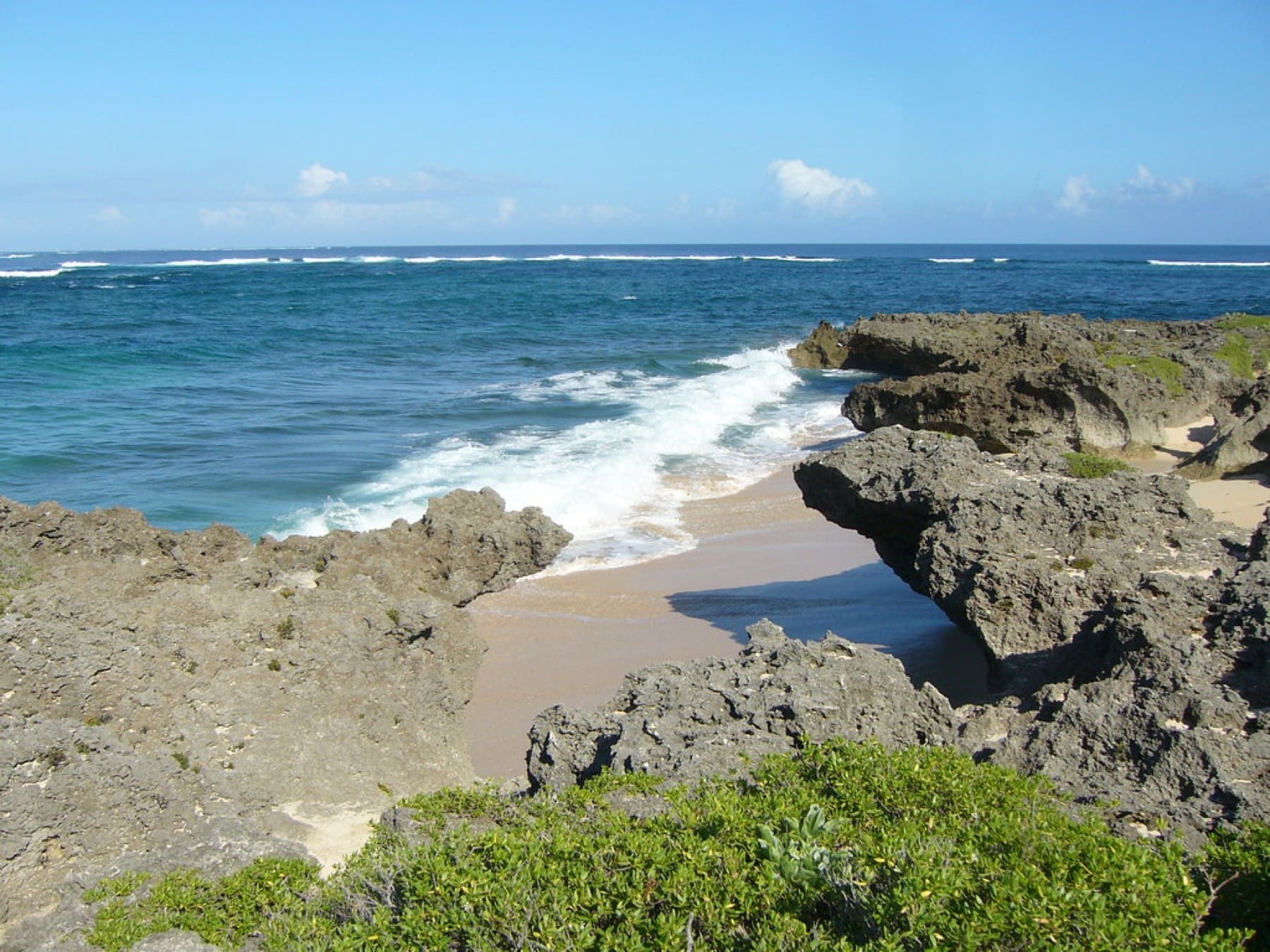
You may swim only at Meegi beach just north of the port, because every other shore on the island is an object of faith. Meegi isn't an official swimming beach and has no lifeguards or jellyfish nets, so you swim there at your own risk. The notice asks riders to go slowly and put safety first, since many roads are unpaved and the village lanes are narrow with blind corners.
How do you behave inside a gusuku?
The gusuku are the stone castles of the Ryukyu lords, and most of them hold prayer sites that people still use. At Nakagusuku Castle eight prayer sites lie within the walls, among them points for praying toward Shuri and toward Kudaka, and people who come only to worship pay the group rate. The castle council bans bicycles, scooters, skateboards and drones from the grounds. At Katsuren Castle, Tamanomiuji-utaki at the top honours the lords' guardian deity, and the stone row beside it is where the priestesses are said to have sat. People come from across Okinawa to pray at the shrines inside Nakijin Castle, and the Uuchibaru holds one of the holiest. Give them room and don't photograph them at prayer. The limestone hill of Kuba-no-utaki to the west is a sacred precinct that locals call Ugaami, and it is best admired from the castle walls.
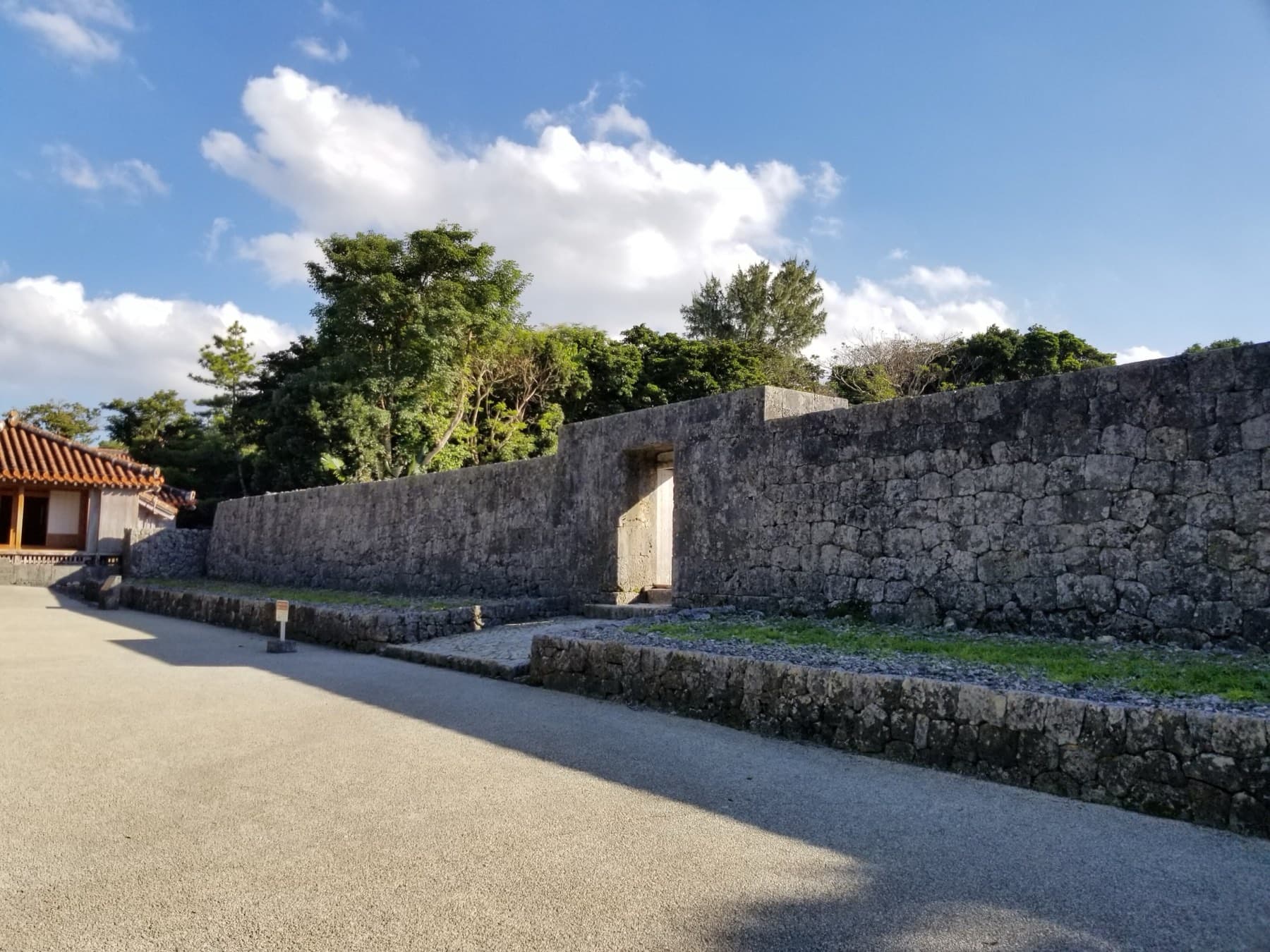
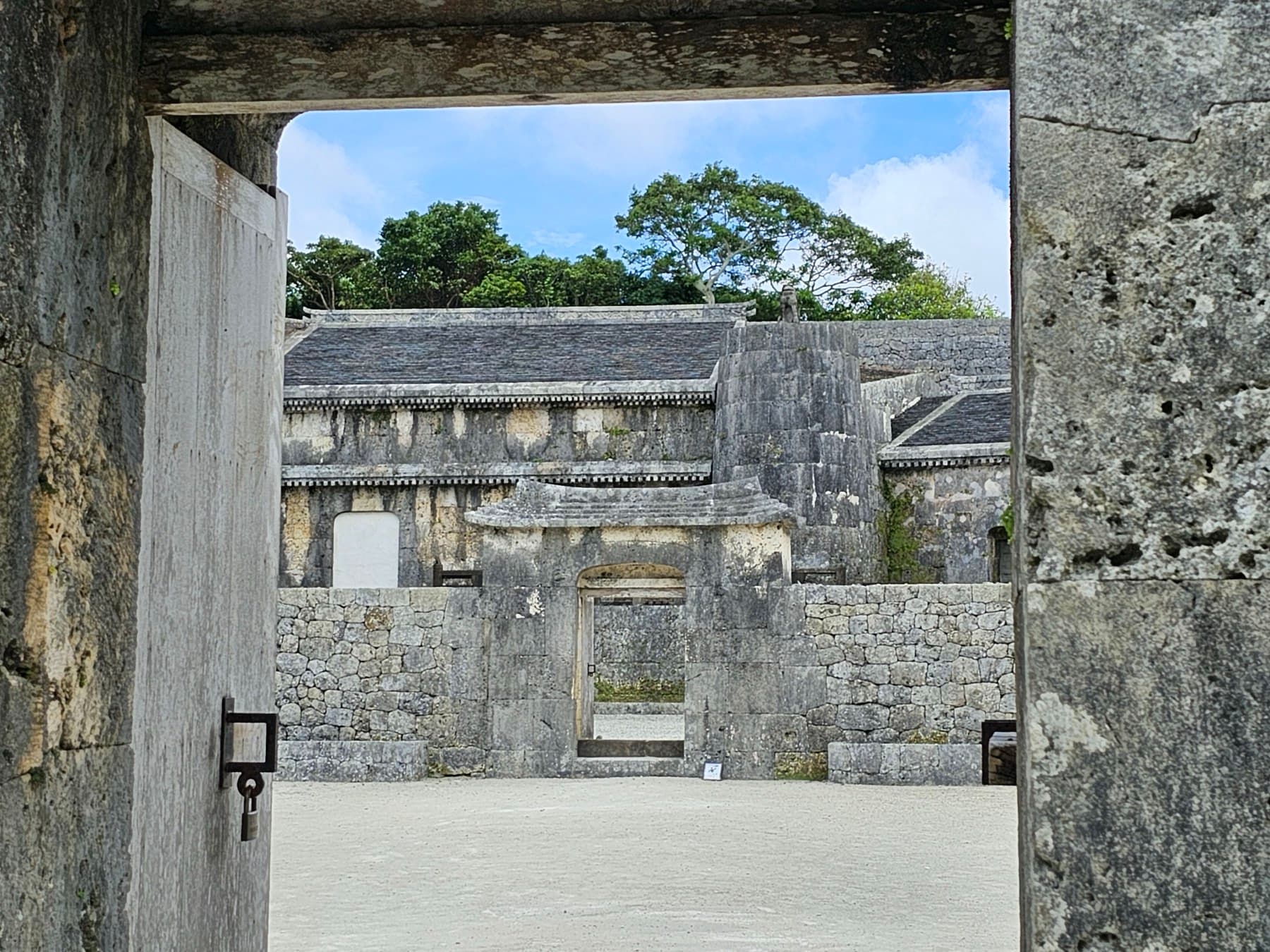
In Shuri, King Sho Shin ordered the Sonohyan-utaki Stone Gate in 1519, and its builder Nishito came from Taketomi. The king stopped here to pray for a safe road whenever he left the castle. The stone gate itself is the place of worship, and the woods behind it form the utaki (Naha City). The fighting of 1945 wrecked it, and the Ryukyu Government rebuilt it in 1956 with what survived. If someone is praying at the gate, wait until they finish before you lift a camera. A short walk west, Tamaudun is the grave of the kings of the second Sho dynasty, so keep your voice low in the courtyard and leave its coral gravel as it lies.
On Hamahiga, people climb the 108 steps to the cave of Shirumichu to pray for children, and the tomb at Amamichu belongs to the same creation story (Uruma tourism association).
How should you visit the Battle of Okinawa memorials?
The battle began when American forces landed in the Kerama Islands on 26 March 1945 and came ashore between Yomitan and Chatan on 1 April. When Shuri fell in late May, the Japanese army withdrew south to the cliffs at Mabuni in Itoman, and refugees crowded into the same ground. Organized fighting ended when the commander Ushijima took his own life on 23 June, which some accounts put on 22 June. The prefecture counted 200,656 dead, and 122,228 of them were people from Okinawa, about 94,000 of them civilians (Okinawa Prefectural Peace Memorial Museum).
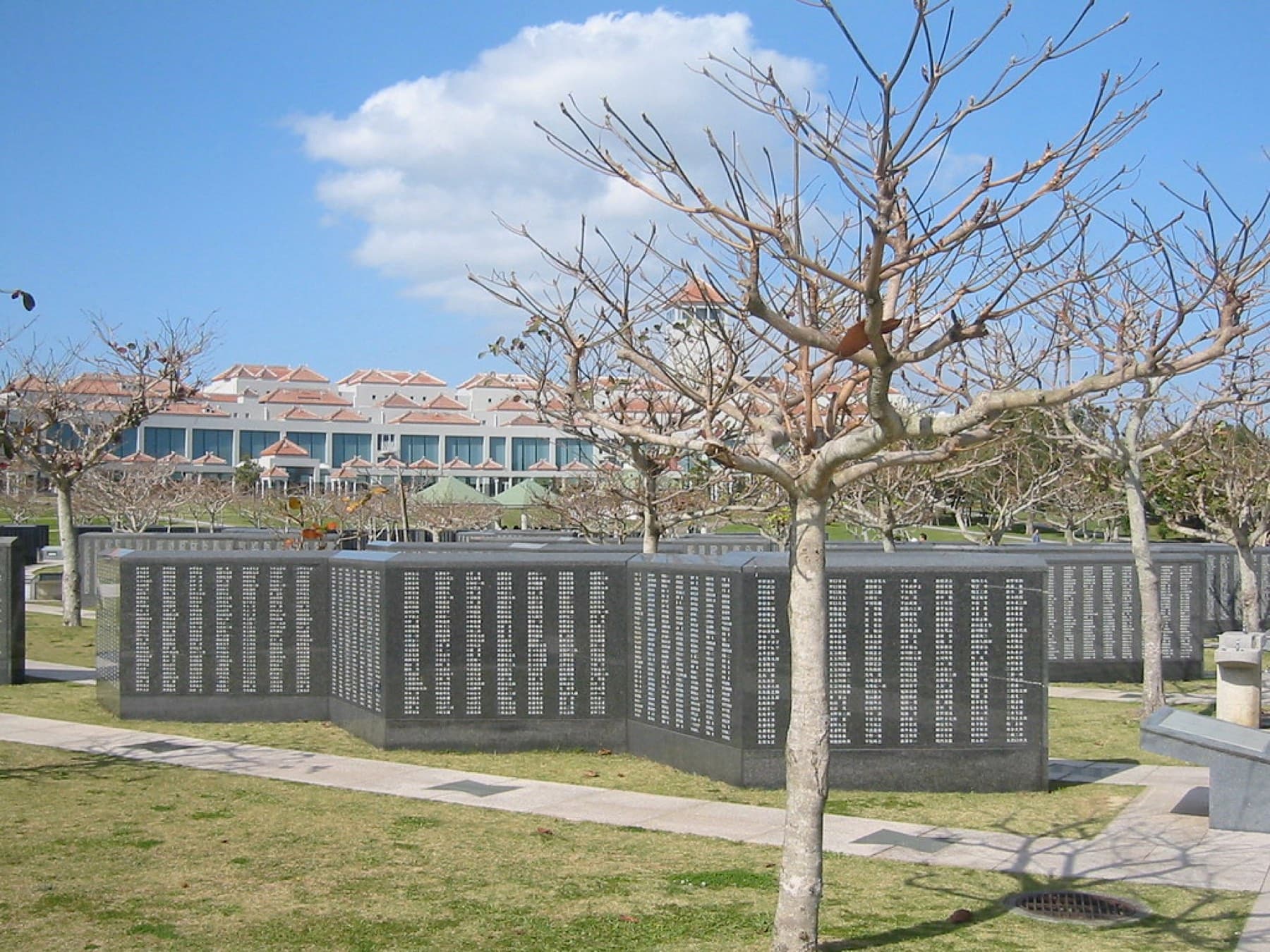
The Okinawa Peace Memorial Park stands at Mabuni. Its Cornerstone of Peace was unveiled in 1995 and carries the names of the battle's dead without distinction between soldier and civilian or between nations, and it held 242,659 names as of 23 June 2026. Families come to find their dead on its gabbro panels, so speak softly and keep off the stones. Leave flowers, folded cranes and other offerings where they are. The park is free, and the Prefectural Peace Memorial Museum charges adults ¥300 in cash. Photography isn't allowed in its permanent galleries. On Irei-no-Hi (23 June) the prefecture holds its memorial service for all the war dead in the park and the roads around it close, so give the service and the families room.
Which rites should you leave alone?
Some rites belong to the people who keep them. The villages of Shimajiri and Nobaru on Miyako hold Paantu, a rite of masked visiting gods, and they keep the dates to themselves until just before, because visitors who misunderstood it caused trouble. The harvest gods Akamata and Kuromata appear at Komi on Iriomote, on Kohama, on Aragusuku and at Miyara on Ishigaki, and photographs, video and even talking about what you saw are forbidden (Japanese Wikipedia). Ride Okinawa publishes no images of either rite and no advice on how to watch them.
Quick answers
What is an utaki in Okinawa?
An utaki (御嶽) is a sacred grove or prayer site of Ryukyuan religion. Many hold an ibi stone that marks where a god came down. Women serve the gods at utaki, and many still let men go only so far. Sefa-utaki in Nanjo was the most sacred utaki of the Ryukyu Kingdom.
When is Sefa-utaki closed?
Sefa-utaki closes on the first to third days of the fifth and tenth lunar months, so the dates move each year, and in 2026 the first closure ran 15–17 June. Nobody enters during these rest days, worshippers included. Conservation work also closes the inner sites from 2 November 2026 to 5 January 2027.
What should you wear to Sefa-utaki?
Wear clothes that cover your shoulders, back and stomach, because Nanjo City asks visitors to skip miniskirts, shorts and camisoles at Sefa-utaki. Wear flat walking shoes for the steep stone paths. Visitors in high heels can borrow free flat sandals at the entrance.
Can you swim on Kudaka Island?
Yes, but only at Meegi beach just north of the port. Kudaka's notice to visitors says every other shore is an object of faith. Meegi beach has no lifeguards or jellyfish nets, so you swim at your own risk.
Can you take photos at Okinawa's sacred sites?
Sefa-utaki asks visitors to refrain from photography as far as possible, and it warns against posing with a prayer site behind you. The Prefectural Peace Memorial Museum bans photography in its permanent galleries. At any utaki or gusuku, wait for people at prayer to finish and keep them out of your photographs.
We write from operators’ and agencies’ own pages, open map data and published research, and we date every fact we check. How we research.
Sources (19)
- https://sefa.okinawa/
- https://sefa.okinawa/sefautaki/
- https://sefa.okinawa/guidance/
- https://sefa.okinawa/photograph/
- https://sefa.okinawa/news/topics/349/
- https://www.kankou-nanjo.okinawa/bunka/200/
- https://kudaka-island.com/notes/
- https://kudaka-island.com/access/
- https://www.kankou-nanjo.okinawa/enjoy/251/
- https://www.city.naha.okinawa.jp/admin/cityhall/1003914/1003918/1003920.html
- https://www.peace-museum.okinawa.jp/
- https://www.peace-museum.okinawa.jp/annai/annai/index.html
- https://www.peace-museum.okinawa.jp/heiwagakusyu/okinawasen_ni_tsuite/qa/q1.html
- https://www.pref.okinawa.lg.jp/heiwakichi/jinken/1008269/1008287/1008288/1008292.html
- https://uruma-ru.jp/see/first-ryukyu-gods/
- https://ja.wikipedia.org/wiki/御嶽_(沖縄)
- https://ja.wikipedia.org/wiki/%E6%96%8E%E5%A0%B4%E5%BE%A1%E5%B6%BD
- https://ja.wikipedia.org/wiki/久高島
- https://ja.wikipedia.org/wiki/アカマタ・クロマタ
Related