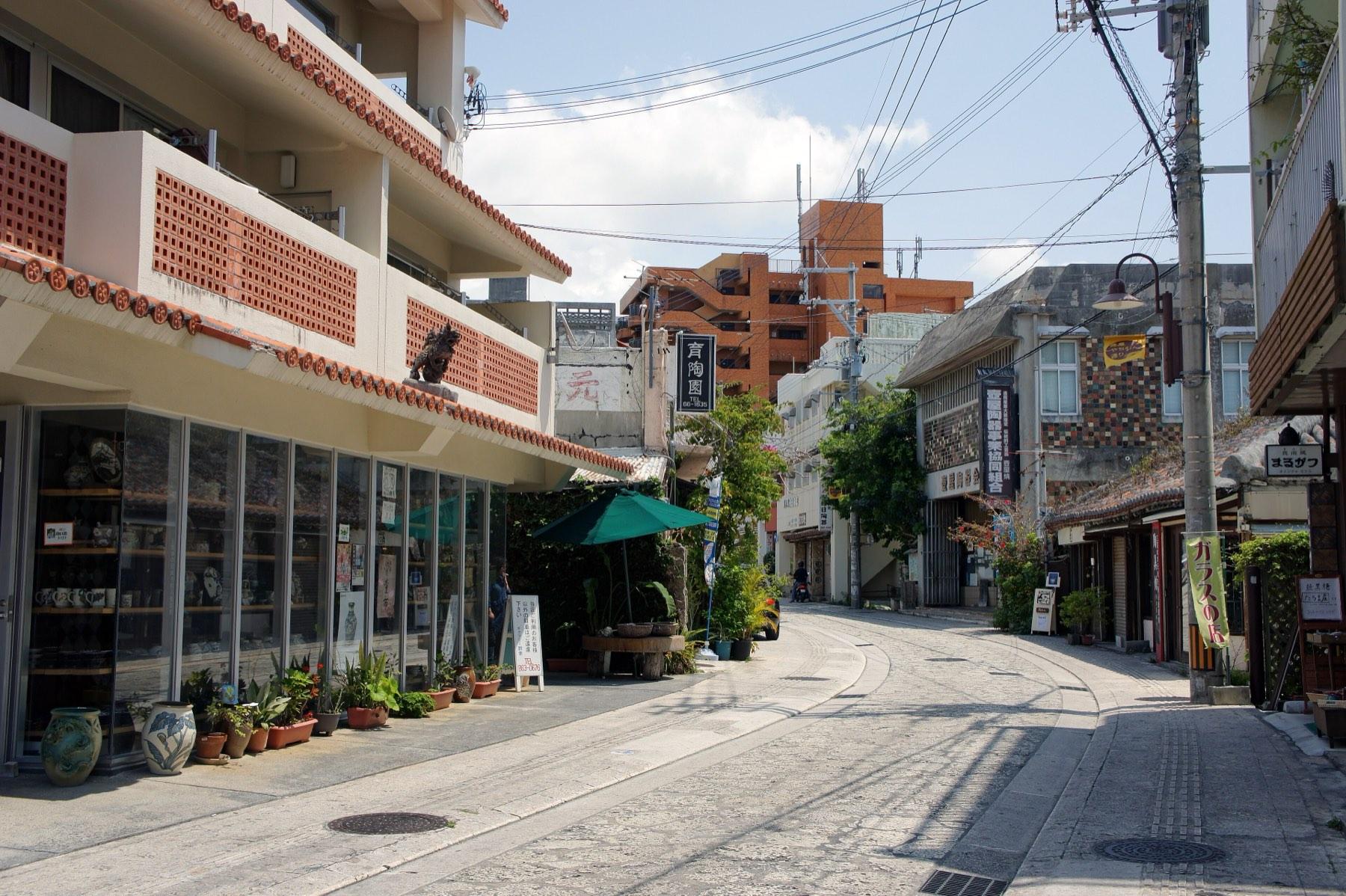
Yachimun no Sato
やちむんの里26°24′ N 127°45′ ECraftPotters began moving here from Tsuboya…
Yachimun no Sato in Yomitan is a village of pottery workshops and wood-fired climbing kilns where potters from Tsuboya began moving in the late 1960s, and you can buy straight from the makers. The yearly Yomitan Yachimun Ichi market falls on 27–28 February 2027.
Photo sota-k · Flickr · CC BY-SA 2.0
Where things stand
The 34th Yomitan Yachimun Ichi pottery market is set for 27–28 February 2027 at the square in front of the JA Yunta Market in Kina, Yomitan.
Visiting with care · Open to visitors
Yachimun no Sato is a cluster of working potteries and the homes of the people who run them, and visitors are guests in a place of work.
- The village is free to walk, and the workshops sell directly
- Studios and kilns are working spaces; enter only where a shop or gallery is open to visitors
- Keep well back from the climbing kilns, especially during a firing
- Ask before photographing potters, their wheels or pieces drying on the racks
- Don't touch work that is drying or waiting to be fired
- Park in the marked areas and stay out of private yards
- Pay the marked price; these are makers selling their own work
Where to see Yachimun no Sato



By the 1970s wood-fired kilns had become hard to run in fast-growing Naha, and Tsuboya's smoke had become a pollution problem. Yomitan offered room. The US military had taken about 95% of the village's land after the war, and as parts came back, a former disposal site inside the Kadena ammunition area turned into the hillside where the new kilns went up. Kuniyoshi Seisho opened a kiln in Yomitan in 1968, and Jiro Kinjo followed in the early 1970s. Many potters came after them.
The village lies in Zakimi, about 1 km east of Zakimi Castle on the map. The climbing kilns run up the hillside, and workshops and galleries open off the lanes around them. The Kitagama joint shop sells the work of the potters who share the kiln of that name, and other studios open their own shops. Hours vary from one workshop to the next, and the Kitagama shop closes for lunch from 13:00 to 14:00.
Once a year the potters bring their work together at the Yomitan Yachimun Ichi. The 33rd market ran on 21–22 February 2026 at the JA Yunta Market square in Kina, and the 34th is set for 27–28 February 2027 at the same place. The Yuntanza Museum at Zakimi Castle held a Yomitan pottery exhibition from 7 February to 22 March 2026.
Worth knowing
- A February 2027 trip can take in the 34th Yomitan Yachimun Ichi on 27–28 February, where many workshops sell at once.
- From Naha Airport the drive takes about 70 minutes. By bus, ride route 29 (the Yomitan line via Kina) to Zakimi-iriguchi and walk about 1 km. The OCVB times the walk from Oyashi at about 15 minutes, and Zakimi-iriguchi is the next stop on and a little closer.
- Go in the morning and pair it with Zakimi Castle.
Street map
Nearby地図
Distances are straight-line kilometres.
Quick answers about Yachimun no Satoよくある質問
When is the Yomitan Yachimun Ichi?
The 34th Yomitan Yachimun Ichi pottery market is set for Saturday 27 and Sunday 28 February 2027 at the square in front of the JA Yunta Market in Kina, Yomitan. The 33rd ran on 21–22 February 2026.
Can you buy pottery at Yachimun no Sato?
Yes. Yachimun no Sato in Yomitan has workshops and galleries that sell their own pottery, including the Kitagama joint shop, which opens 9:30–17:30 with a lunch break.
Can you visit Yachimun no Sato?
Open to visitors. The village is free to walk, and the workshops sell directly. Studios and kilns are working spaces; enter only where a shop or gallery is open to visitors. Keep well back from the climbing kilns, especially during a firing.
How much does Yachimun no Sato cost?
Yachimun no Sato is free to visit.
What are the opening hours of Yachimun no Sato?
Yachimun no Sato is open each workshop sets its own hours; the Kitagama joint shop opens 9:30–17:30 with a break from 13:00 to 14:00, closed each workshop has its own days off; the Kitagama joint shop closes on irregular days, so check before you go.
How should you behave at Yachimun no Sato?
At Yachimun no Sato: Ask before photographing potters, their wheels or pieces drying on the racks. Don't touch work that is drying or waiting to be fired. Park in the marked areas and stay out of private yards. Pay the marked price; these are makers selling their own work.
Within 12 km
Sights nearby見る


Within 12 km
Places to eat and drink nearby食


Within 12 km
Culture and history nearby文化

Within 12 km
Places to stay nearby宿

Paid links
Line up the trip around Yachimun no Sato
Some of these links pay us a commission. It costs you nothing and keeps the guide independent. How the links work
In the journal