guide · 7 min read
Where should you buy yachimun pottery, Tsuboya or Yomitan?
Tsuboya Yachimun Street puts about 20 pottery workshops and shops on a 400 m stone lane in central Naha. For wood-fired pieces bought at the kiln, Yomitan's Yachimun no Sato has 19 workshops, and its potters hold their yearly market on 27–28 February 2027.
By Ride Okinawa · Updated 2026-10

Tsuboya Yachimun Street in Naha suits an hour between other plans, since its lane of about 20 workshops, shops and galleries runs 400 m from the end of the Makishi market arcades. For pieces bought beside the kilns that fired them, drive about 70 minutes north from Naha Airport to Yachimun no Sato in Yomitan, where 19 independent workshops share a hillside. Its potters sell together at the Yomitan Yachimun Ichi on 27–28 February 2027 (OCVB).
We read Naha City's notices on the Tsuboya Pottery Museum, the Tsuboya Pottery Cooperative's site, the potteries' own shops, the Okinawa Convention and Visitors Bureau (OCVB) and Yomitan Village in October 2026, along with Japan Post and the National Tax Agency on getting pieces home.
How do Tsuboya and Yomitan compare?
| Tsuboya Yachimun Street, Naha | Yachimun no Sato, Yomitan | |
|---|---|---|
| What it is | A 400 m stone-paved lane of about 20 workshops, shops and galleries | A hillside village of 19 independent workshops around climbing kilns |
| Hours | Each shop sets its own; Ikutouen's shops open 10:00–18:00 | Each workshop sets its own; the Kitagama shop opens 9:30–17:30 with a break 13:00–14:00 |
| Getting there | Walk from Kokusai-dori through the Heiwa-dori arcade | About 70 minutes by car from Naha Airport; about 1 km on foot from the Zakimi-iriguchi stop on bus route 29, or 15 minutes from Oyashi |
| Big sale | Tsuboya Pottery Festival, 20–22 November 2026 | Yomitan Yachimun Ichi, 27–28 February 2027 |
| Go for | An easy hour of shopping, plus clay classes | Wood-fired pieces bought at the kiln |
Sources: the OCVB's Yachimun no Sato listing, Ikutouen and the Tsuboya Pottery Cooperative, read October 2026.
What is yachimun?
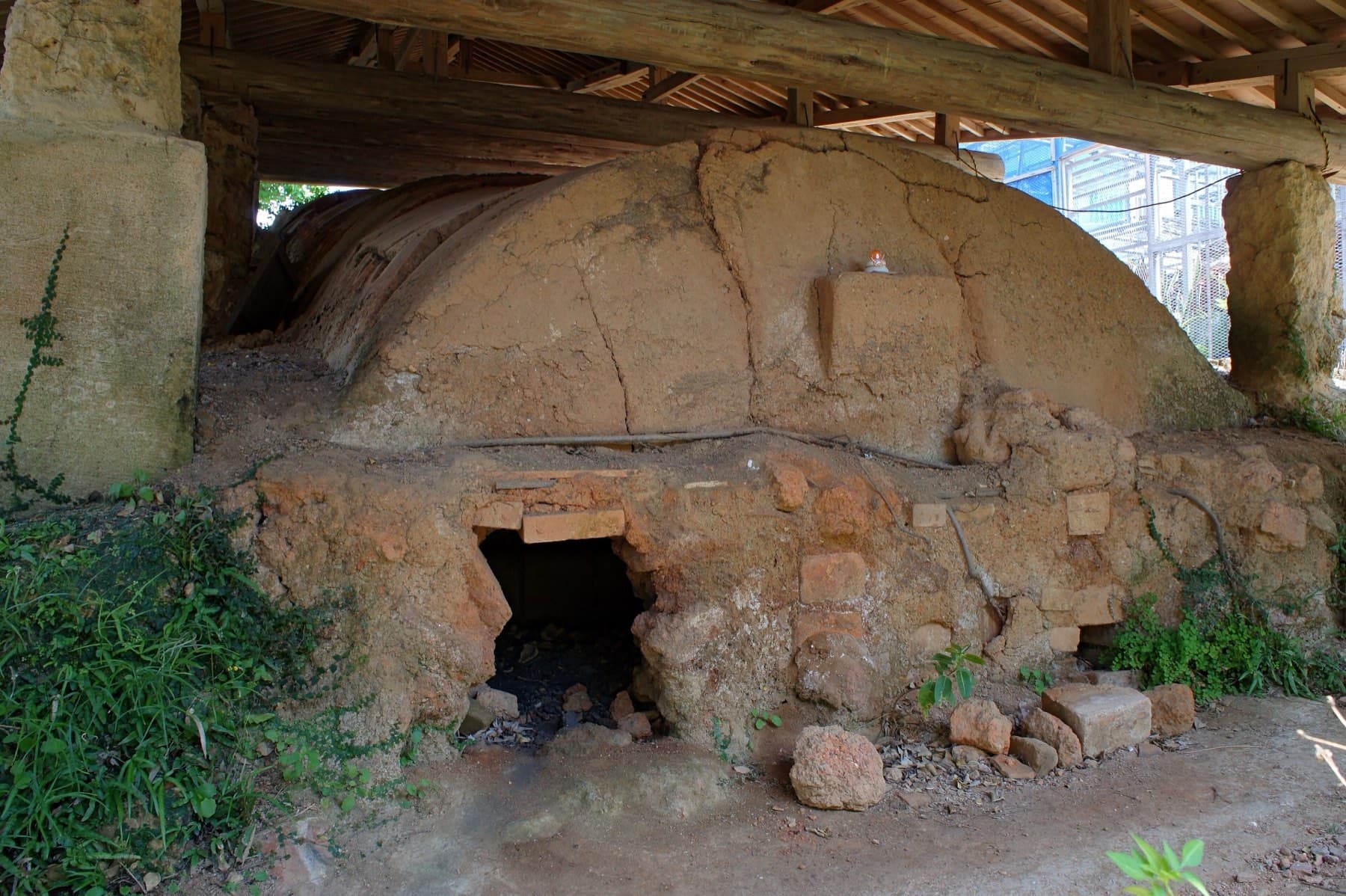
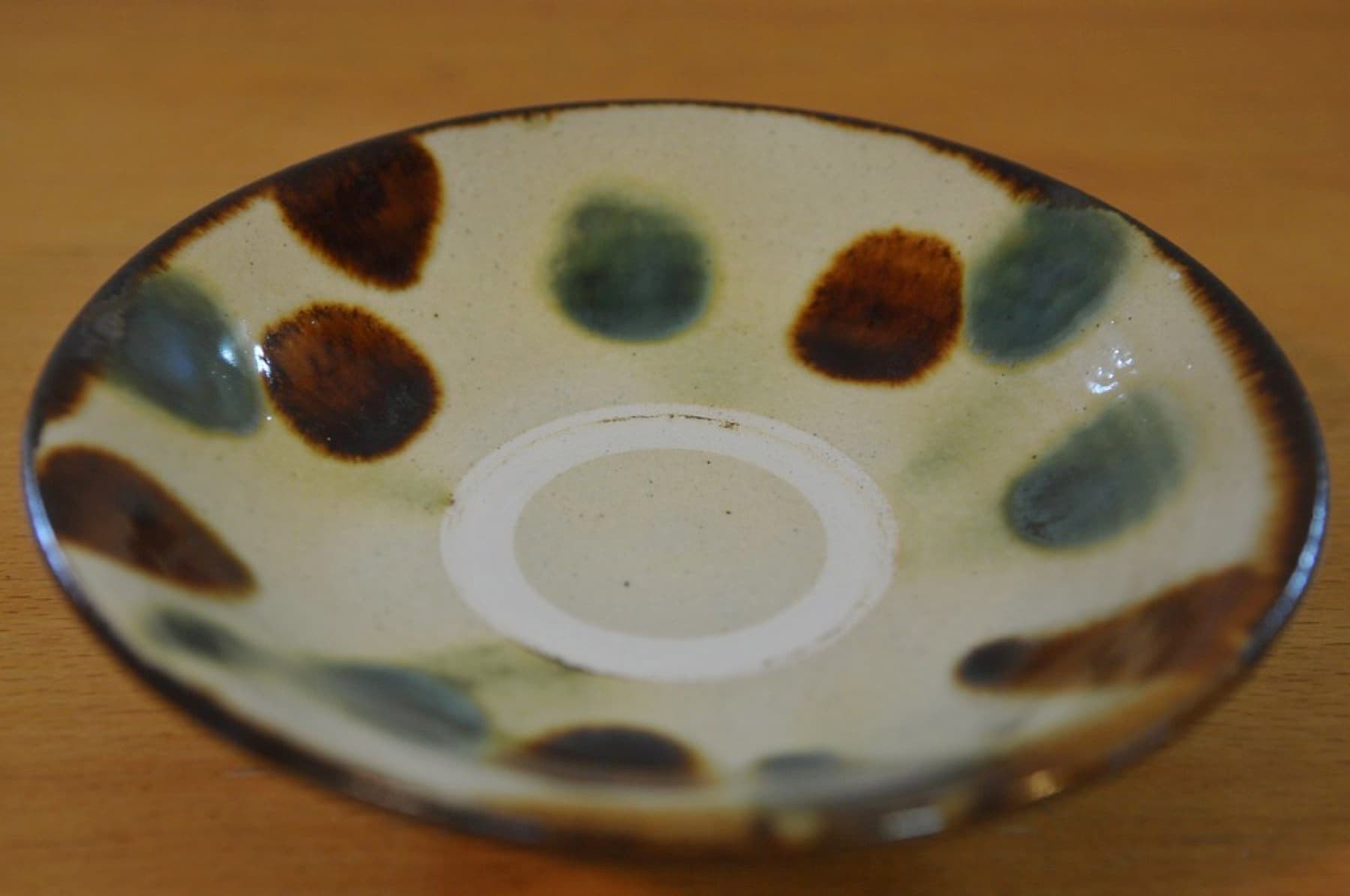
Yachimun is the Okinawan word for pottery. Tsuboya's potters made two kinds of ware. Unglazed arayachi went into big jars for water and awamori and into urns for the bones of the dead. The glazed and painted pieces for the table are jooyachi. The royal government created Tsuboya in 1682 by moving three kilns onto one site south of Makishi. After the Battle of Okinawa its potters were the first people allowed back into Naha, and an advance party of 140 potters and builders arrived on 14 November 1945. The settlement that grew around their kilns became the seed of the postwar city. Jiro Kinjo was among those potters, and he later became Okinawa's first Living National Treasure.
The Tsuboya Pottery Cooperative counts 24 kilns making Tsuboya ware today (cooperative). Smoke from the wood-fired kilns became a problem as Naha grew in the 1970s, and many potters moved their climbing kilns to Yomitan.
What can you see on Tsuboya Yachimun Street?
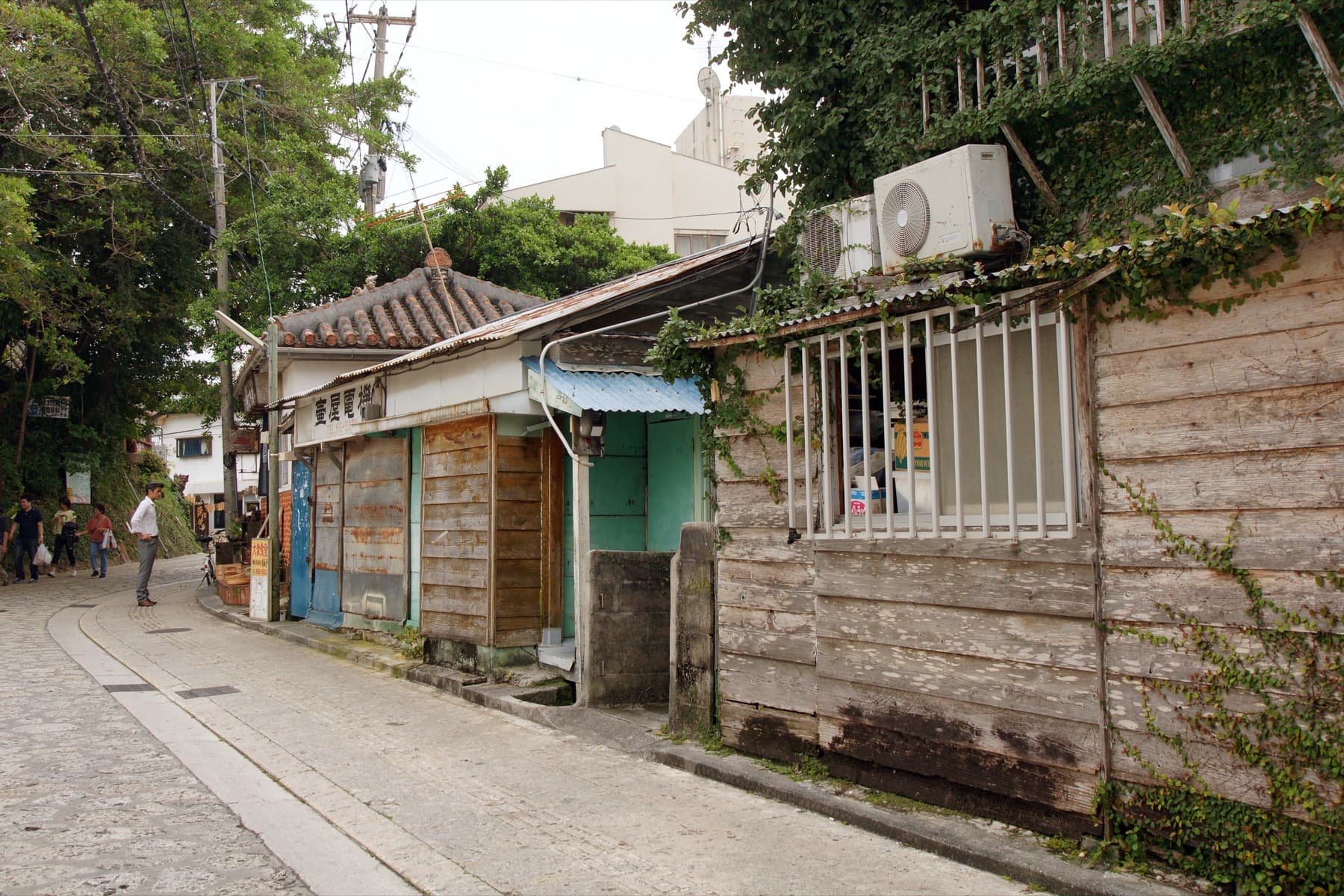
Walk the lane slowly and duck into the side alleys. The Naha Municipal Tsuboya Pottery Museum is closed from 1 September 2026 to 31 March 2027 while Naha rebuilds its outer walls, and it reopens on 1 April 2027 (Naha City). In normal times it opens 10:00–18:00 except Mondays and charges adults ¥350, with university students and younger in free (OCVB). A February 2027 visit will find the shops open and the museum shut.
Two old kilns survive. The Arayachi climbing kiln runs up the slope under a red-tile roof, and the prefecture protects it, so look from the lane and keep off it. The Arakaki family house is a National Important Cultural Property, and its Agari-nu-kama climbing kiln was built under the Ryukyu Kingdom and fired until 1974. It collapsed in heavy rain in 2009 and was rebuilt, and when the restored site opened in March 2021 Ryukyu Shimpo reported viewing from 13:00 to 17:00 from Friday to Sunday (Ryukyu Shimpo). Check before you go, since those hours date from 2021.
People live behind these stone walls. Ask before you photograph inside a workshop or a potter at work, and hold pieces with both hands.
What does a piece cost?
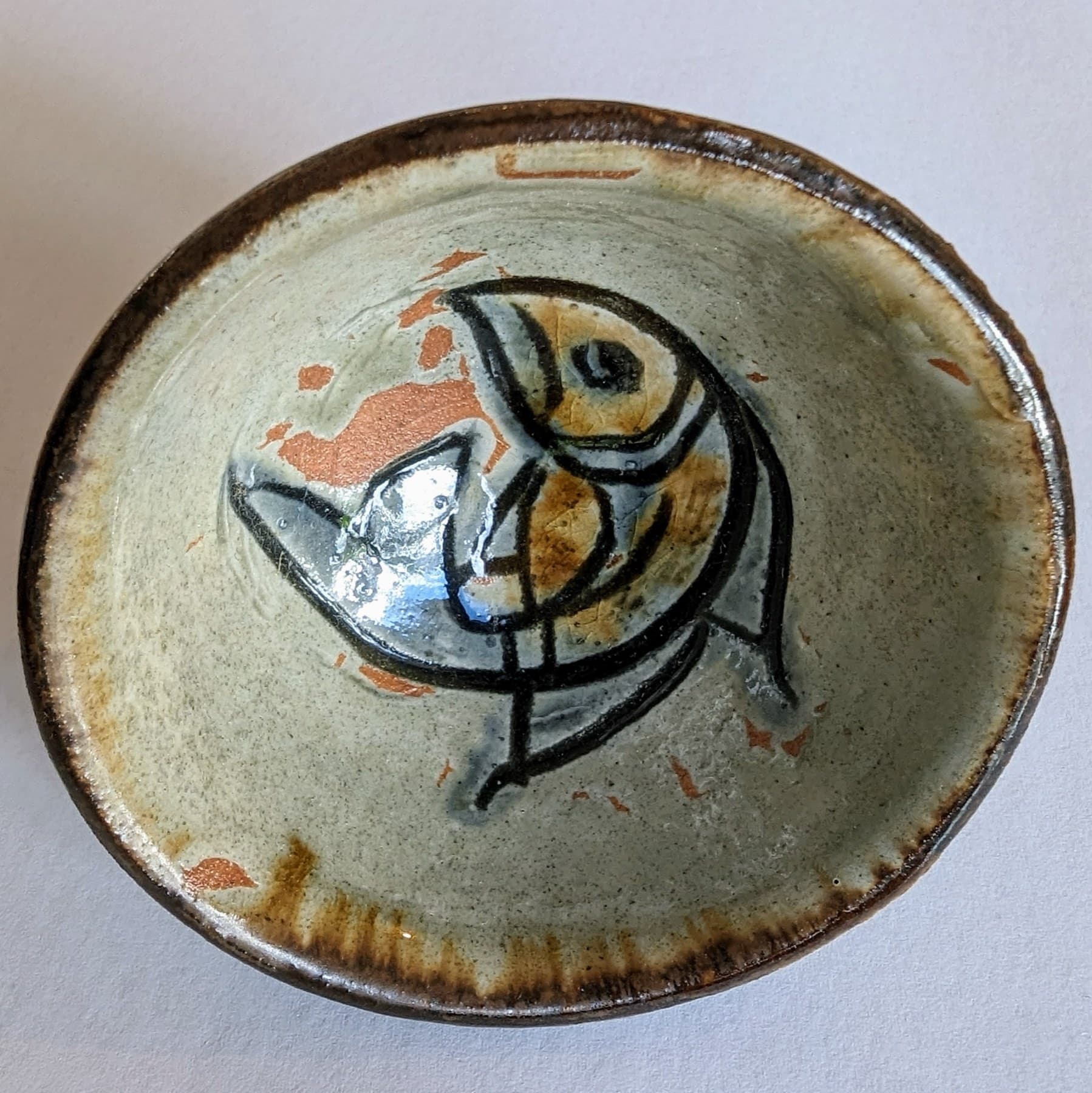
The Takaesu family has run Ikutouen on the street for six generations. In October 2026 its online shop sold small plates from about ¥4,500 and soba bowls for about ¥8,000 (Ikutouen shop).
| Ikutouen piece | Size | Price (tax included) |
|---|---|---|
| 3.5-sun plate, fish line-carving | Not listed | ¥4,510 |
| 5-sun plate, arabesque line-carving | About 15.5 cm | ¥4,840 |
| 7-sun plate, arabesque line-carving | About 22 cm | ¥7,920 |
| Medium mug, arabesque line-carving | About 12.5 cm tall | ¥5,940 |
| Rice bowl (meshi-makai), fish line-carving | About 12.5 cm across | ¥5,390–5,610 |
| Soba bowl (soba-makai) | Not listed | ¥7,810–8,250 |
Source: shop.ikutouen.com, with sizes from ikutouen.com, read October 2026. A sun is an old Japanese measure of about 3 cm.
The Ikutouen main shop and its Kamany shop share an address at 1-22-33 Tsuboya and open 10:00–18:00, closing only on 1–2 January.
The map
Every place in this piece, on its island.
Contours from AWS Terrain Tiles; reefs and coast from OpenStreetMap.
Can you make your own?
Yes, though you won't carry it home. Ikutouen's Yachimun Dojo on the street teaches shisa making and hand-building from ¥4,400, and the fired piece reaches you by post one to two and a half months later (Ikutouen). Ikutouen lists postage only within Japan, from ¥1,000 inside Okinawa and ¥1,400 elsewhere. If you live abroad, ask before you book or have it sent to a Japanese address you trust. Tenbusu Naha on Kokusai-dori runs short craft classes too, pottery among them.
Culture
Tsuboya Yachimun Street
Tsuboya Yachimun Street in Naha is a 400 m lane paved with Ryukyu limestone where about 20 pottery workshops, shops and galleries carry on a craft that the royal government gathered here in 1682. The street is free to walk, and the Naha Municipal Tsuboya…
- Kind
- Craft
- Entry
- Free
- Hours
- Shops and workshops set their own hours.…
What is Yachimun no Sato like?
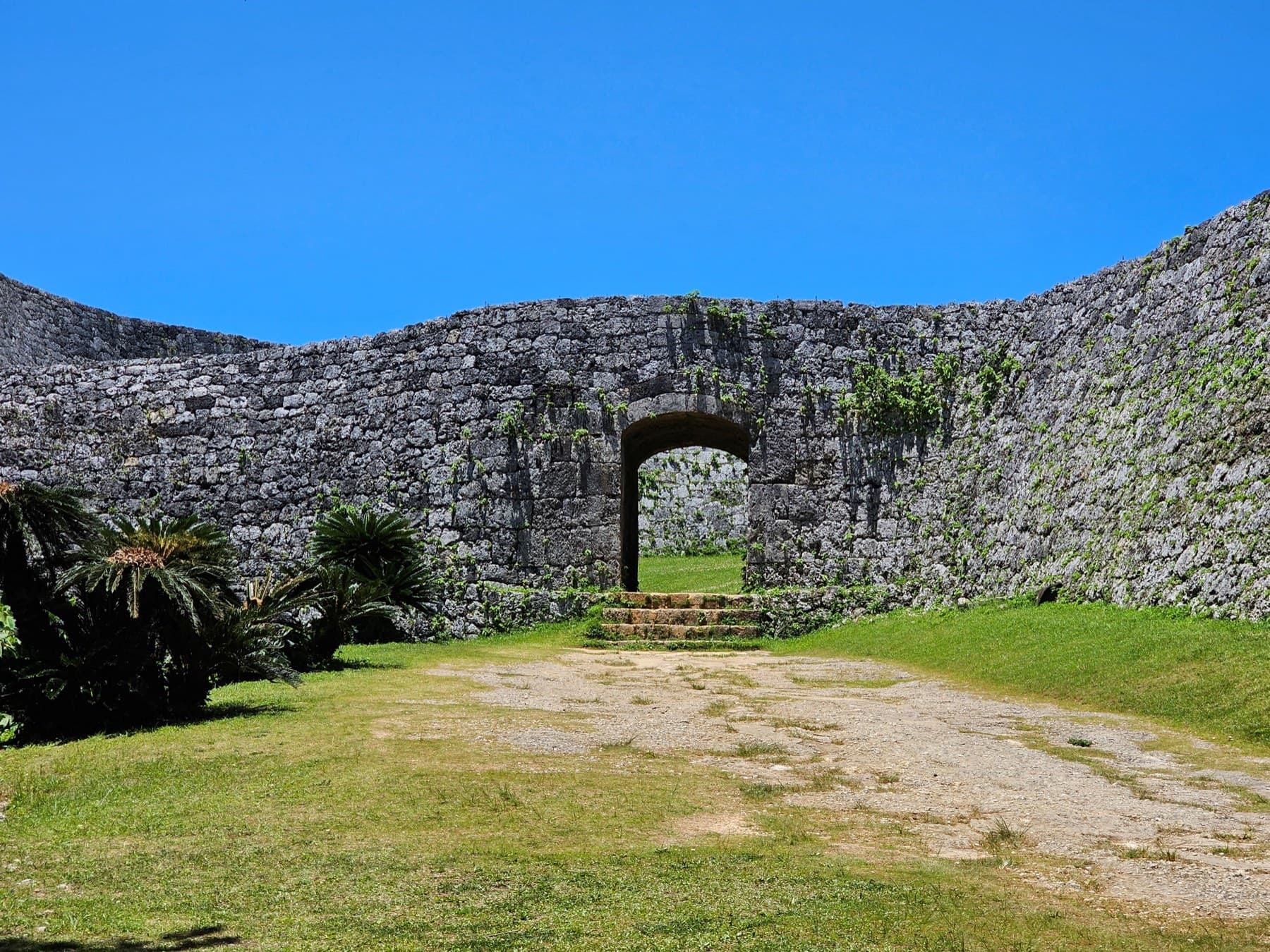
Yachimun no Sato is a working village in Zakimi, Yomitan, where Tsuboya potters began moving in 1968. Jiro Kinjo followed in the early 1970s. The OCVB counts 19 independent workshops (OCVB). The Kitagama kiln, which four master potters opened in 1992, has 13 chambers stepping up the hill and fires five times a year (Google Arts & Culture, Kyoto Women's University). The Kitagama joint shop sells the four workshops' pieces from 9:30 to 17:30 with a lunch break from 13:00 to 14:00. It closes on irregular days, so ring 098-958-6488 before a special trip.
Come in the morning and keep well back from a kiln that is firing. Don't touch pieces drying on the racks, and park only where it's marked, because the potters' homes and yards sit among the workshops. Zakimi Castle lies about 1 km to the west and makes a good pairing on a ride. Yomitan Village's Yuntanza Museum at the castle showed 99 pieces by 56 village potters from 7 February to 22 March 2026 (Yomitan Village), so check its programme for a winter show in 2027.
When are the big pottery sales?
The 34th Yomitan Yachimun Ichi runs on Saturday 27 and Sunday 28 February 2027 on the square in front of the JA Yunta Market in Kina, Yomitan (OCVB). Many workshops sell there at once, which saves driving between them. In Naha the 47th Tsuboya Pottery Festival fills Tsuboya Elementary School from 20 to 22 November 2026, 10:00–17:00 (Tsuboya Pottery Cooperative).
How do you get pottery home?
Carry what you can and post the rest. Wrap each plate in a spare riding jersey and tuck it into your hand luggage for the flight home. For bigger pieces, Japan Post's EMS takes parcels up to 30 kg to more than 120 countries with tracking, from ¥1,450 (Japan Post). Ask the shop to pack it for the post, and ask whether it ships abroad itself, because Ikutouen's online shop quotes free delivery only within Japan.
Japan's tax-free shopping changed on 1 November 2026. Shops now charge consumption tax at the till, and you get it back once customs confirms at departure, within 90 days of the purchase, that you are taking the goods out of Japan (National Tax Agency). Keep any tax-free pottery in your luggage so customs can see it.
Quick answers
Is the Tsuboya Pottery Museum open?
No. The Naha Municipal Tsuboya Pottery Museum is closed for exterior renovation from 1 September 2026 to 31 March 2027 and reopens on 1 April 2027. Tsuboya Yachimun Street and its shops stay open.
When is the Yomitan Yachimun Ichi in 2027?
The 34th Yomitan Yachimun Ichi pottery market runs on 27–28 February 2027 on the square in front of the JA Yunta Market in Kina, Yomitan.
How much does Okinawan pottery cost?
At Ikutouen in Tsuboya, a 5-sun plate of about 15.5 cm cost ¥4,840 and a medium mug ¥5,940 in October 2026, tax included. Larger 7-sun plates of about 22 cm cost about ¥8,000.
How many workshops are at Yachimun no Sato?
Yachimun no Sato in Yomitan has 19 independent pottery workshops, according to the Okinawa Convention and Visitors Bureau. Each one sets its own hours, and the Kitagama joint shop opens 9:30–17:30 with a lunch break.
Can you ship pottery home from Okinawa?
Yes. Japan Post's EMS sends parcels of up to 30 kg to more than 120 countries with tracking, from ¥1,450. Ikutouen in Tsuboya lists delivery only within Japan, so ask any shop about overseas shipping before you buy.
We write from operators’ and agencies’ own pages, open map data and published research, and we date every fact we check. How we research.
Sources (17)
- https://www.city.naha.okinawa.jp/shisetsu/bunka/1004864/1004867.html
- https://www.okinawastory.jp/spot/1354
- https://tuboya.com/
- https://tuboya.com/information/1115/
- https://ryukyushimpo.jp/news/entry-1281186.html
- https://www.ikutouen.com/
- https://shop.ikutouen.com/
- https://www.ikutouen.com/yachimun-dojo/
- https://www.okinawastory.jp/spot/600011571
- https://okinawabus.com/wp/wp-content/uploads/2016/03/291.pdf
- https://www.busnavi-okinawa.com/top/Location
- http://www.edu.city.naha.okinawa.jp/tsuboya/
- https://www.okinawastory.jp/event/600023133
- https://www.vill.yomitan.okinawa.jp/kanko_bunka_sports/rekishi_bunkazai/6835.html
- https://artsandculture.google.com/asset/yomitanzanyaki-north-kiln-ceramics-from-okinawa/zAEFKvXe_qeOJA
- https://www.post.japanpost.jp/service/send/oversea/list/delivery/ems/index_en.html
- https://www.nta.go.jp/publication/pamph/shohi/menzei/201805/format/002.htm
Related