Okinawa soba
沖縄そばNoodle
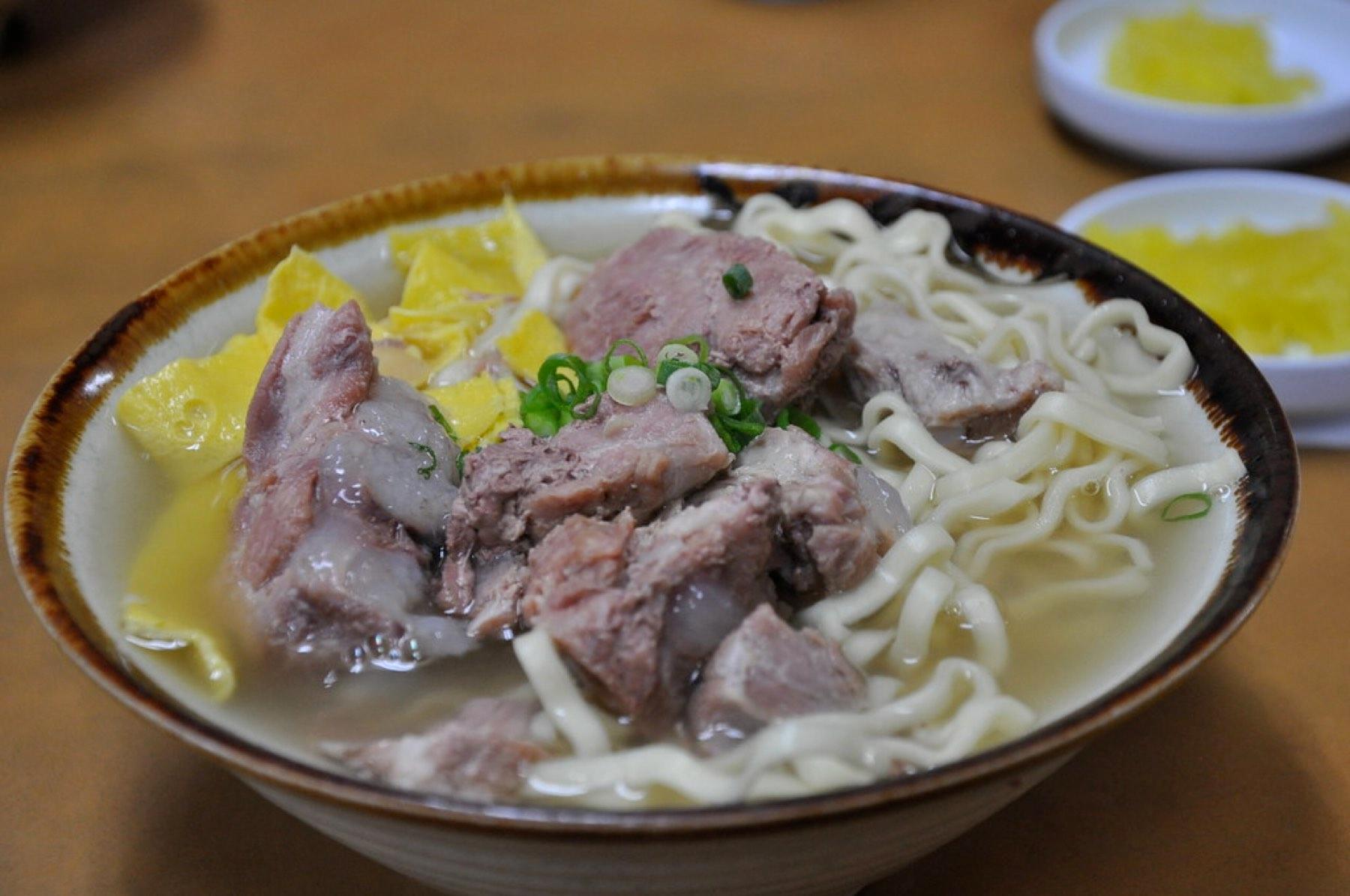
Okinawa soba is the everyday noodle soup of the islands: wheat noodles with no buckwheat in a broth of pork bone and katsuobushi bonito. Shops across the prefecture serve it all year, and it carries soba in its name because the Fair Trade Commission approved Honba Okinawa soba as a special case on 17 October 1978.
Photo pelican from Tokyo, Japan · Wikimedia Commons · CC BY-SA 2.0 and others, credited in the gallery
Where to eat Okinawa soba · 66 places


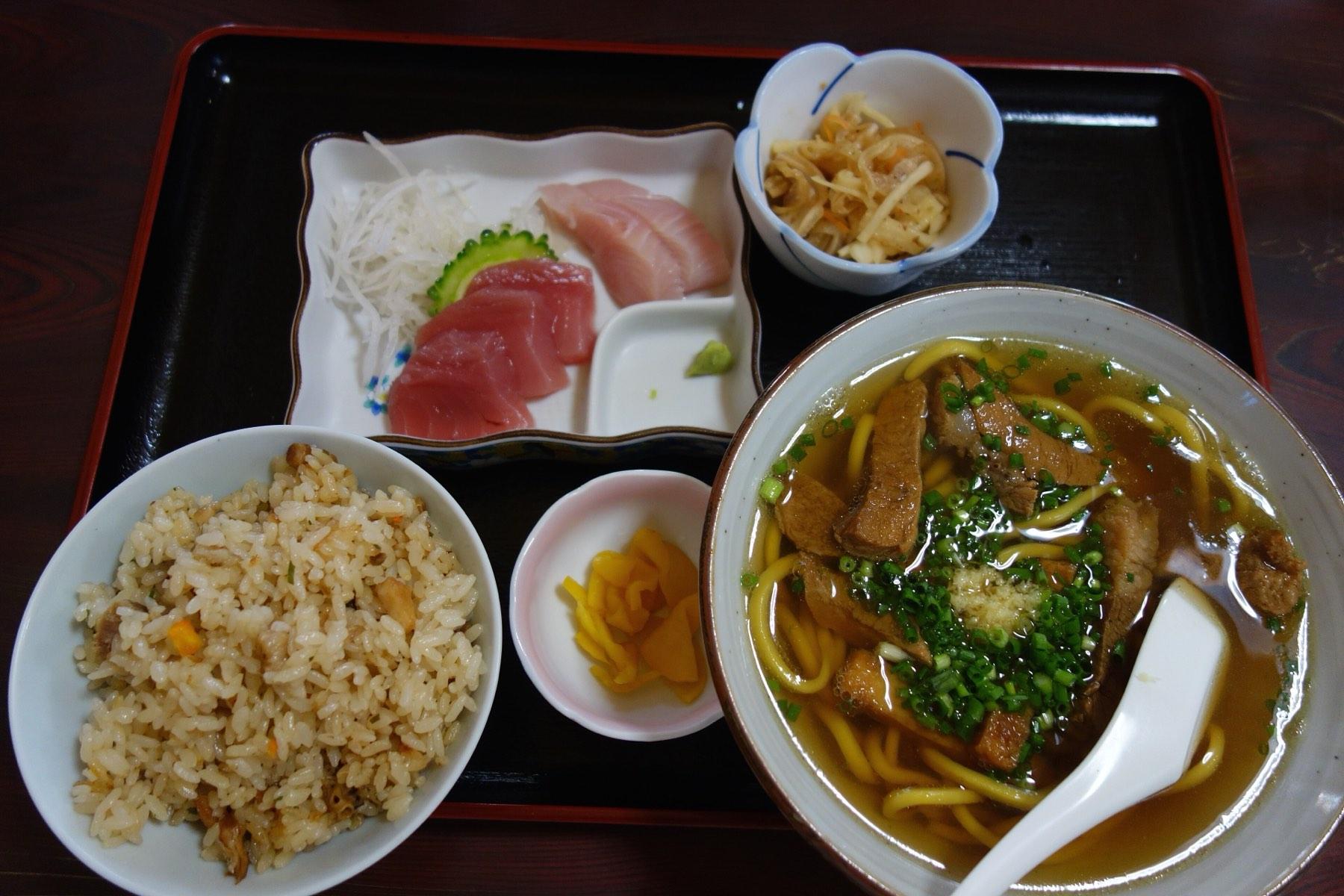
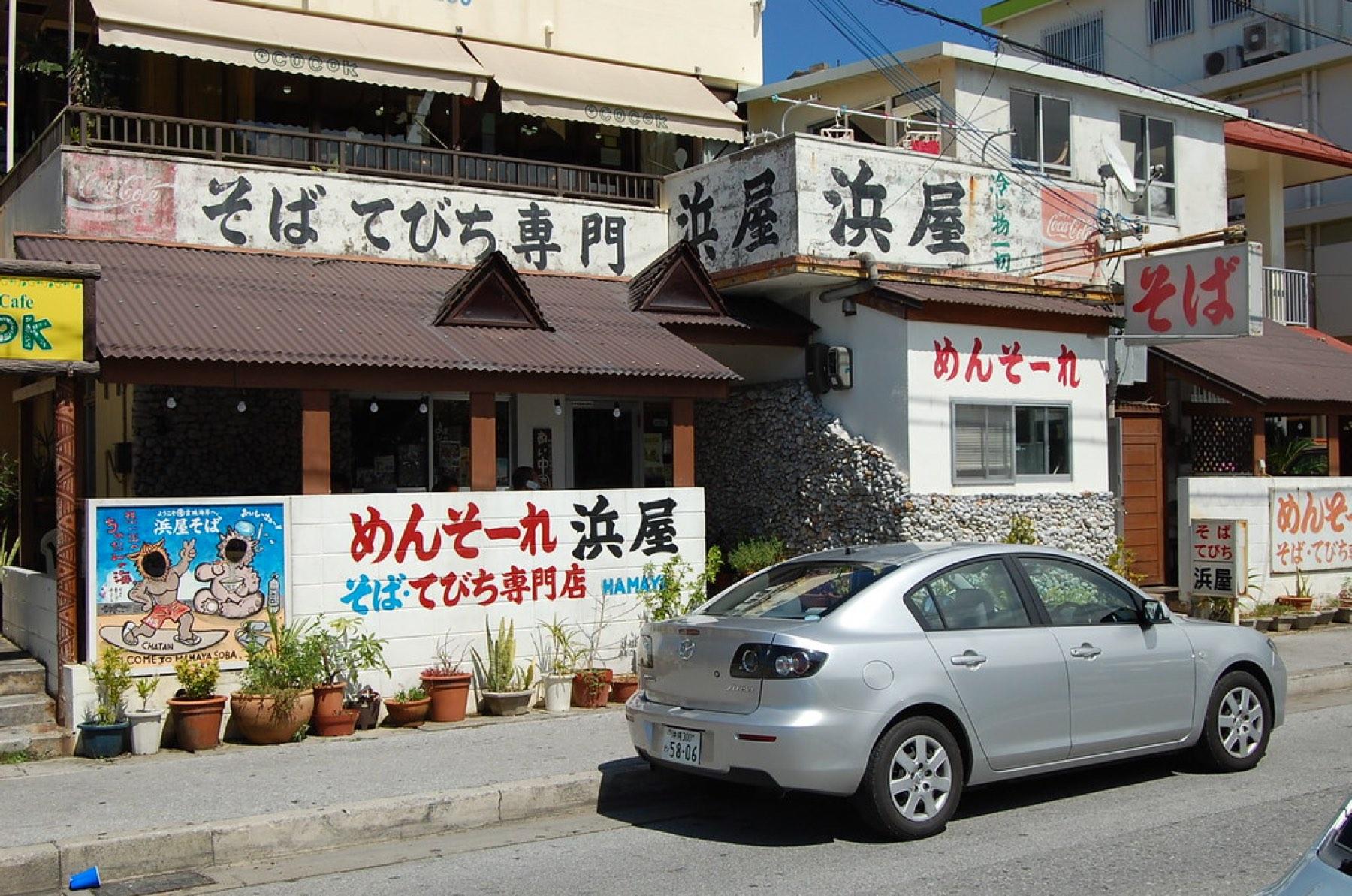

The noodle is wheat flour and kansui alkaline water, so it sits closer to ramen than to the buckwheat soba of Tokyo, and it gets a coat of oil after boiling that keeps it firm in the bowl. Around Naha the noodle comes thick and slightly twisted. Up in Nago and the north, shops cut it flat like kishimen, and the OCVB describes the northern broth as darker and heavier on bonito. A good bowl carries sanmainiku (pork belly simmered in soy, sugar and awamori) with a stick of kamaboko fish cake beside it. A few shops still make mokkai soba with lye from the ash of trees such as gajumaru banyan in place of kansui.
Noodles reached the Ryukyu court from Fujian in southern China as food for visiting envoys. The street bowl began in the middle of the Meiji era, when a Chinese cook opened a shina soba shop in Naha near the Tsuji pleasure quarter, and the first written reference dates from 1902. The Battle of Okinawa destroyed most of the shops that wartime shortages had not already closed. The revival ran on the wheat flour that came with the American occupation, and noodle factories selling boiled noodles spread through the 1950s and 1960s.
After reversion in 1972 the name Okinawa soba took hold to tell it apart from mainland buckwheat soba. In 1976 the Fair Trade Commission ruled that a noodle without buckwheat could not be sold as soba, and the Okinawa noodle cooperative spent two years and eight months negotiating an exemption. The commission approved Honba Okinawa soba on 17 October 1978 under a written standard for the flour, the water, the kansui, the noodle thickness and the oil finish. The cooperative declared that date Okinawa Soba Day in 1997, and the name became a regional collective trademark in 2006.
Worth knowing
- Go early. Many soba shops serve until the noodles run out, and some close by mid-afternoon.
- Shake in koregusu a few drops at a time, because the chillies sit in awamori.
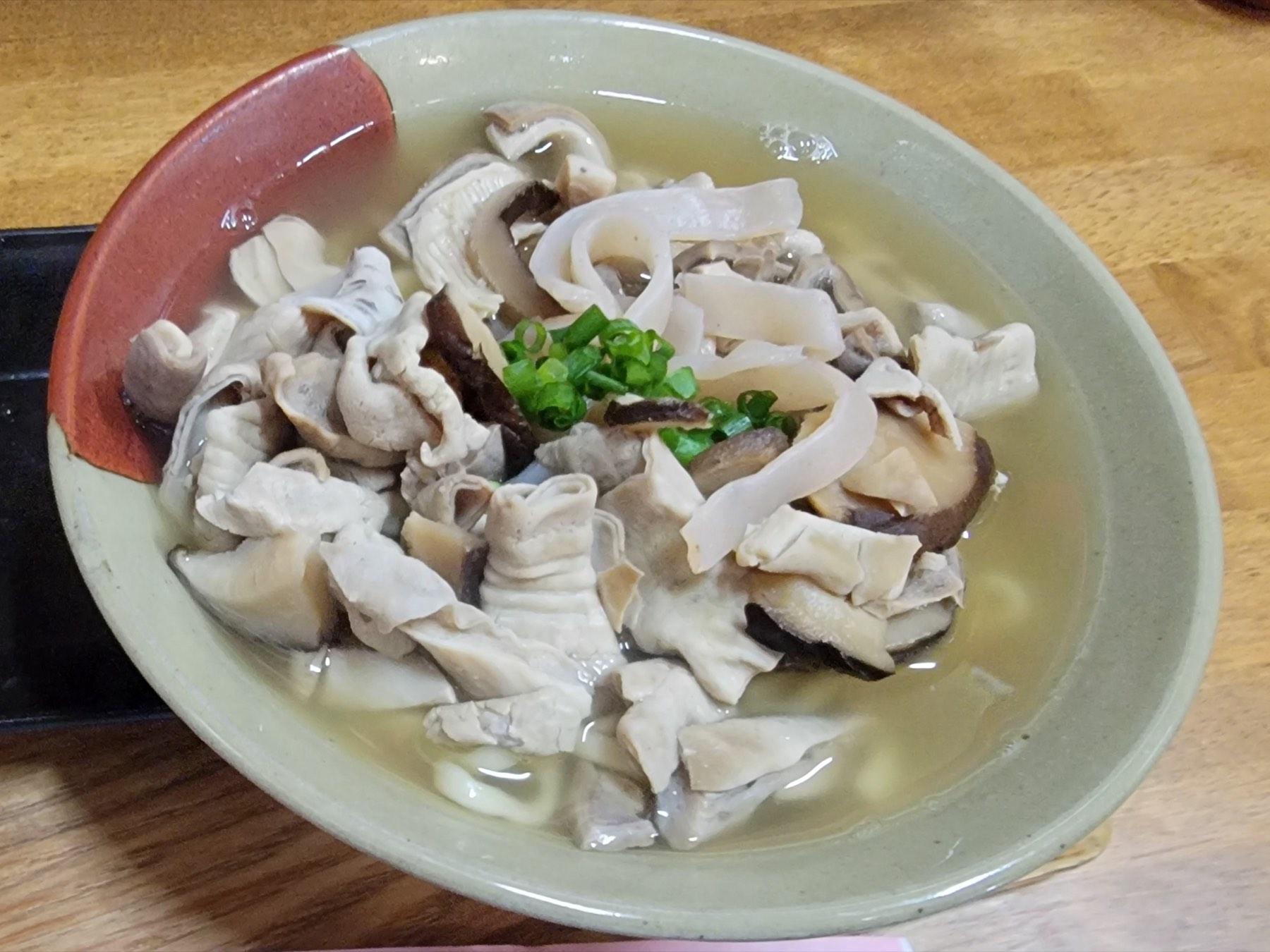
Quick answers about Okinawa sobaよくある質問
Why is Okinawa soba called soba if it has no buckwheat?
Okinawa soba keeps the name because the Fair Trade Commission approved Honba Okinawa soba as a special designation on 17 October 1978. The noodle is all wheat. The commission had objected to the name in 1976, and the Okinawa noodle cooperative negotiated the exemption under a written standard for how the noodles are made.
When is Okinawa Soba Day?
Okinawa Soba Day is 17 October. The Okinawa noodle cooperative chose the date in 1997 to mark the day in 1978 when the Fair Trade Commission approved the name Honba Okinawa soba.
What is the difference between Okinawa soba and ramen?
Okinawa soba uses a wheat and kansui dough like ramen, and the noodles are boiled for about two minutes and then finished with oil, which gives them a firm, dense bite. The broth is pork bone with katsuobushi bonito, and the classic topping is simmered pork belly with kamaboko fish cake.
How do you order Okinawa soba?
Order by topping and size. Sanmainiku soba comes with pork belly and soki soba with spare ribs, and many shops will add a juushii rice set to either. Plenty of shops sell tickets from a machine by the door. On the table you will find koregusu (island chillies steeped in awamori) and beni-shoga pickled ginger to add as you eat.
When is Okinawa soba in season?
Okinawa soba: Year-round; Okinawa Soba Day is 17 October.
Where can you eat Okinawa soba in Okinawa?
Places we list for Okinawa soba include Fukaki Soba, Fukugi Shokudo, Fukugi-ya, Gabusoka Shokudo Honten, Garden Kitchen and Café Gusuku.
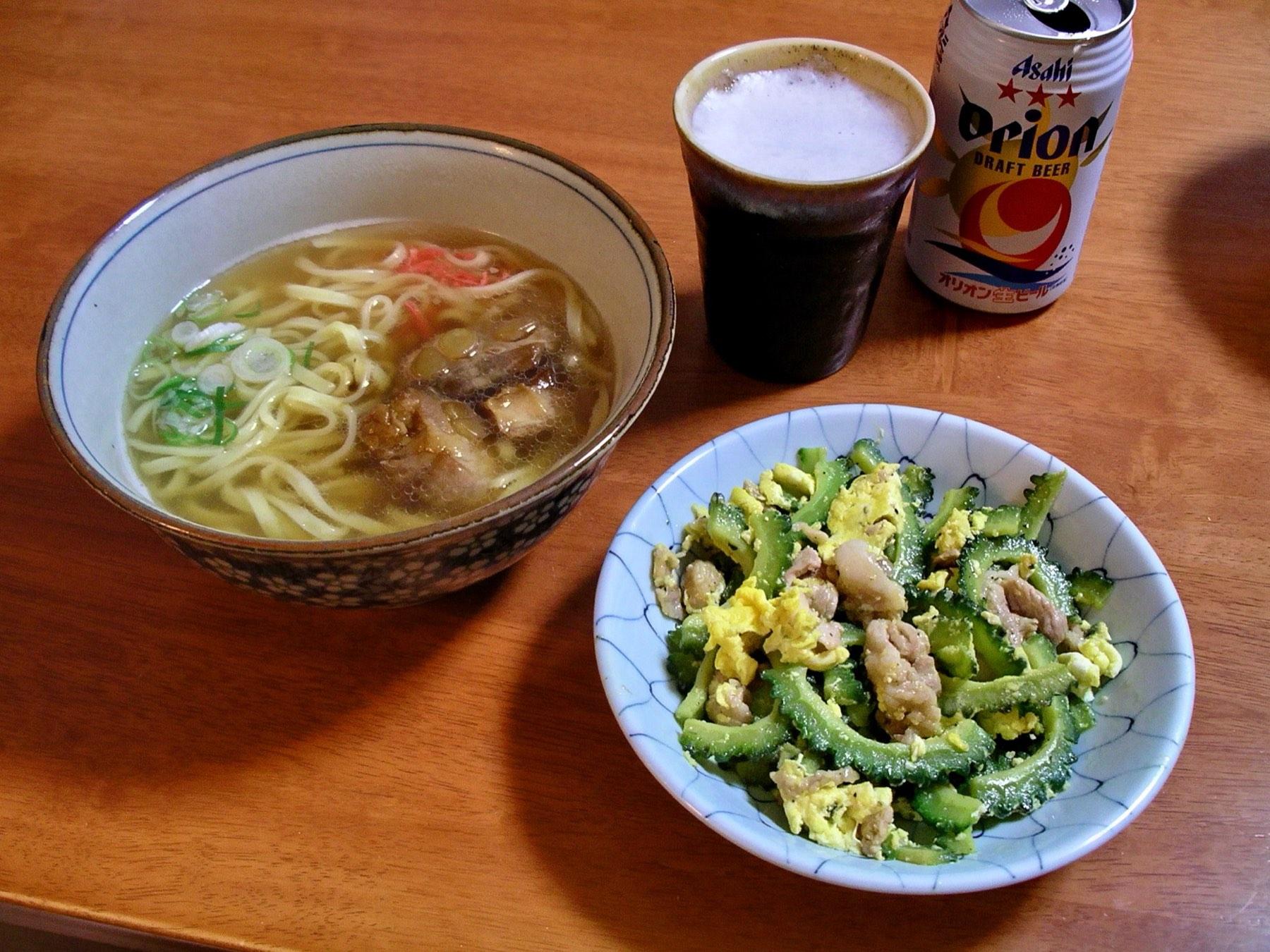
Paid links
Line up the trip around Okinawa soba
Some of these links pay us a commission. It costs you nothing and keeps the guide independent. How the links work
In the journal
