guide · 8 min read
How do Okinawa soba, Miyako soba and Yaeyama soba differ?
All three are wheat noodles in pork and bonito broth, and the differences come down to the cut of the noodle, the weight of the broth, where the pork sits and what waits in the jar on the table.
By Ride Okinawa · Updated 2026-10
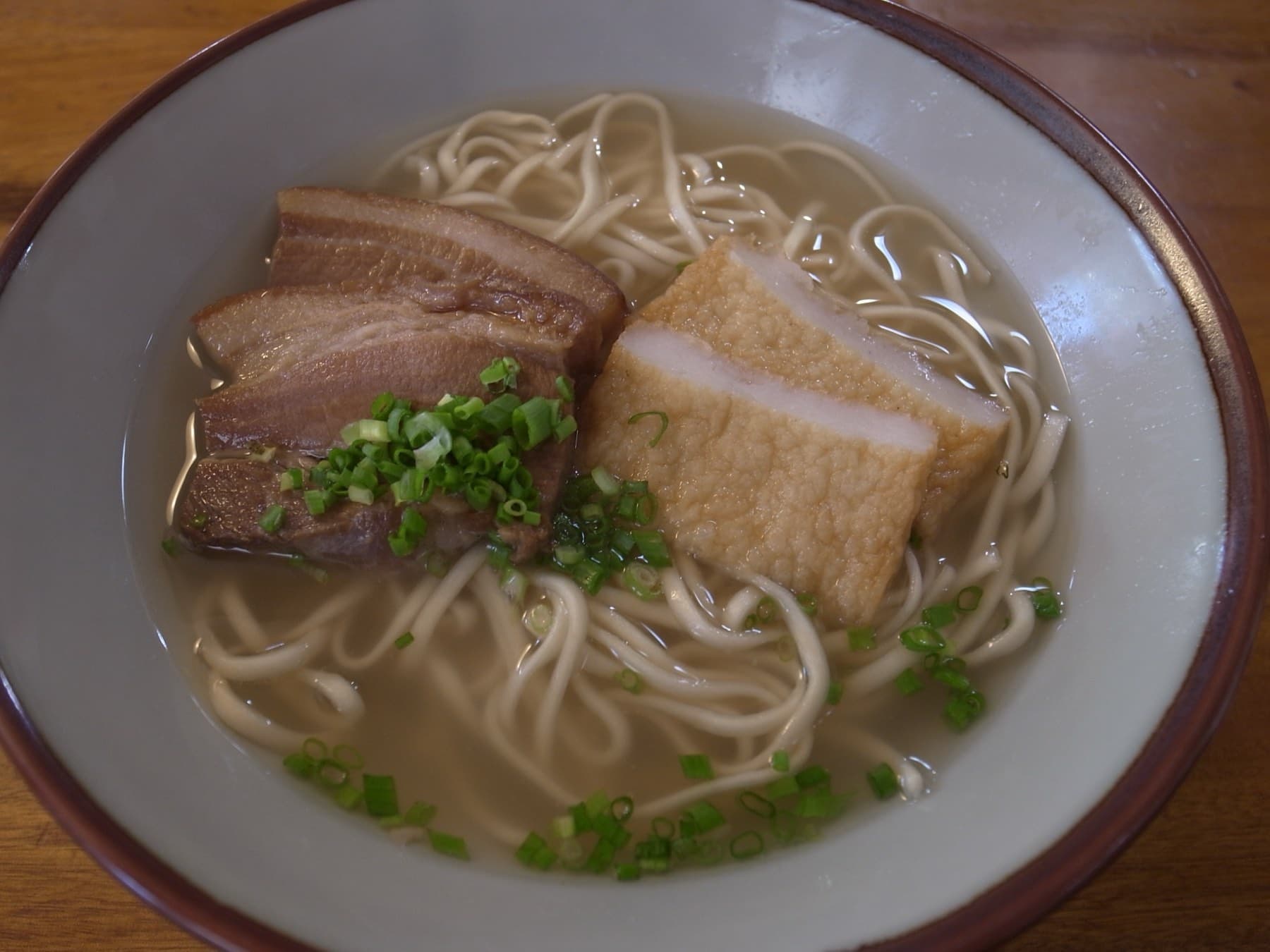
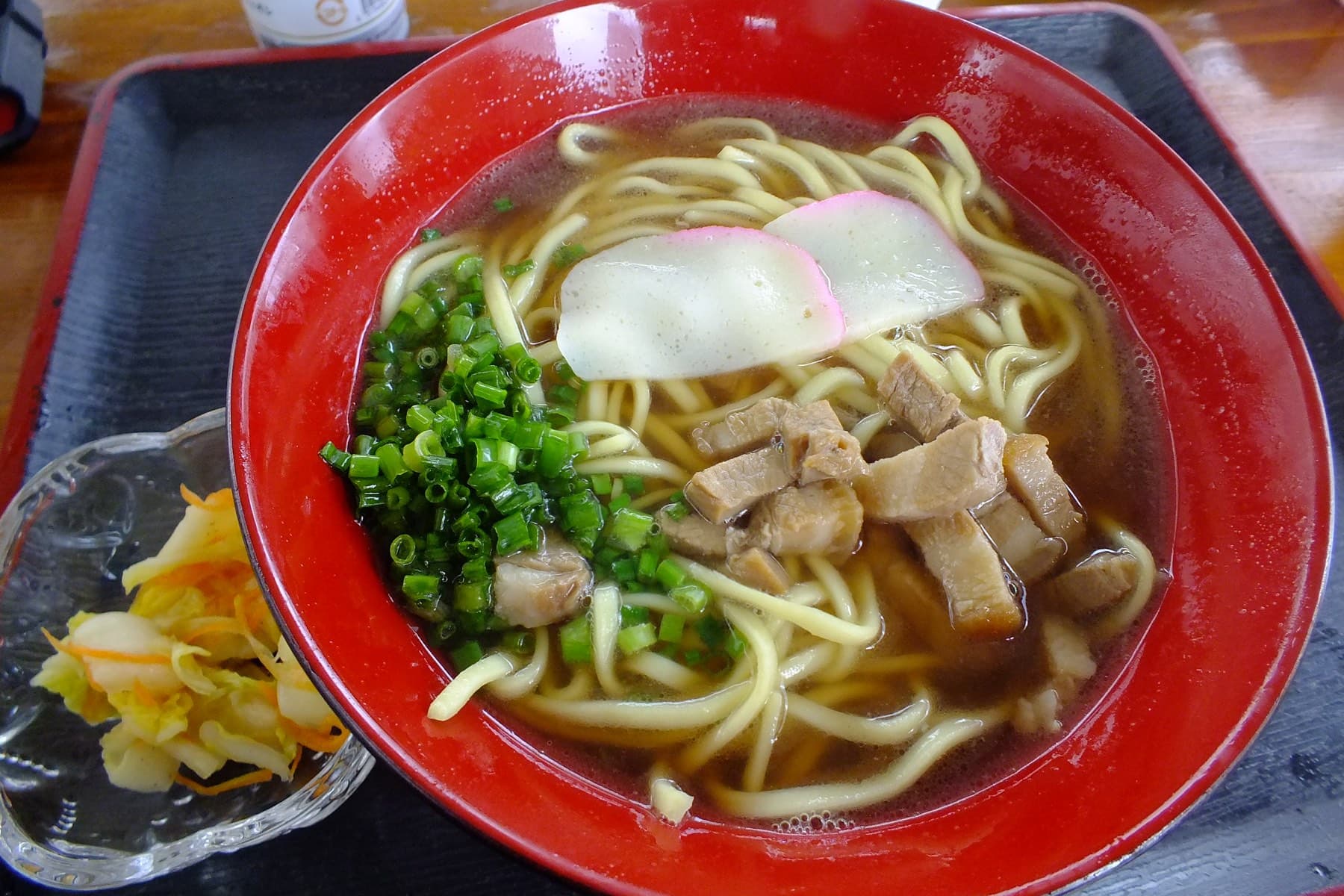
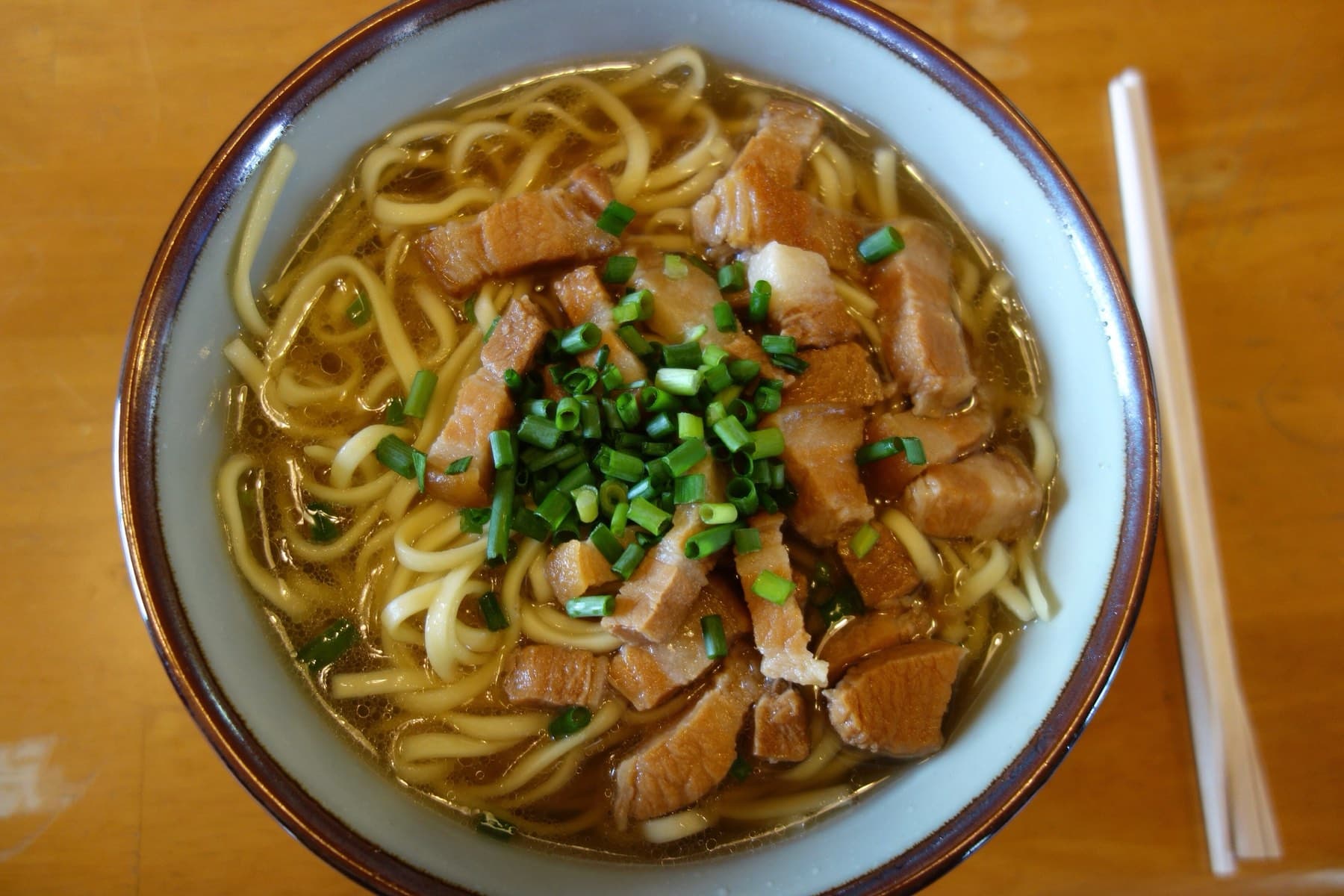
Okinawa soba, Miyako soba and Yaeyama soba are all wheat noodles with no buckwheat in them, and all three come in broth built on pork and bonito. The main-island bowl around Naha has thick, slightly twisted noodles about 3–4 mm wide in a clear broth, and the north of the island cuts them flat like kishimen and pours a darker broth heavy with bonito (OCVB). Miyako's noodles are thin and flat and barely curl, and they sit in a light broth over pork that the old custom hides underneath. In the Yaeyama Islands the noodles are thin and round, and the pork comes cut into strips over a broth with a slight sweetness. You season that bowl with pipaatsu (island long pepper).
This guide draws on the Okinawa Convention and Visitors Bureau's soba page, the Ministry of Agriculture's regional food records, Japanese Wikipedia's histories of each style and the shops' own pages and dated Tabelog reviews, read in October 2026. Prices carry the date of the review or menu they came from.
How do the three sobas compare?
| Okinawa soba (main island) | Miyako soba | Yaeyama soba | |
|---|---|---|---|
| Noodle | Thick and slightly twisted around Naha; flat like kishimen in the north | Thin, flat and straight, with almost no curl | Thin, round and straight; some makers colour them yellow |
| Broth | Pork bone and bonito, clear in the centre and south, darker in the north | Light, leaning on bonito with some pork or chicken behind it | Mainly pork bone, with a sweet edge |
| Toppings | Sanmainiku pork belly and kamaboko fish cake; spare ribs on soki soba | Pork and kamaboko, traditionally buried under the noodles | Lean soy-simmered pork and kamaboko in thin strips |
| On the table | Koregusu chillies in awamori, red pickled ginger | Curry powder at several shops, koregusu | Pipaatsu pepper; red ginger rarely appears |
| The noodle-makers' rule | A written standard for flour, kansui, thickness and oil finish | The noodles must be made on Miyako | The noodles must be made on Ishigaki |
| Where to start | Shuri Soba, Kishimoto Shokudo | Koja Sobaya, Hisamatsu Seimenjo | Kunatsuyu, Soba Dokoro Takenoko |
The Okinawa noodle cooperative keeps ten-point standards for Honba Miyako soba and Honba Yaeyama soba, and the rule on where the noodles are made comes from those (Japanese Wikipedia, Miyako soba).
Why is it called soba when there's no buckwheat in it?
The dough is wheat flour and kansui alkaline water, as in ramen, and after boiling the noodle gets a coat of oil that keeps it firm in the bowl. In 1976 the Fair Trade Commission ruled that a noodle without buckwheat could not be sold as soba. The Okinawa noodle cooperative spent two years and eight months negotiating, and on 17 October 1978 the commission approved the name Honba Okinawa soba under a written standard for how the noodles are made (Japanese Wikipedia, Okinawa soba). The cooperative declared that date Okinawa Soba Day in 1997, and the name became a regional collective trademark in 2006.
The bowl itself is older. Noodles reached the Ryukyu court from Fujian as food for visiting envoys, and the street bowl began in the middle of the Meiji era when a Chinese cook opened a shina soba shop in Naha near the Tsuji district. The first written reference dates from 1902. After the Battle of Okinawa the revival ran on wheat flour that came with the American occupation. A few shops still make mokkai soba and knead the dough with lye from the ash of trees such as the gajumaru banyan in place of kansui.
What makes main-island Okinawa soba?
Order it around Naha and you'll get the thick, twisted noodle in a clear broth with sanmainiku (pork belly simmered in soy, sugar and awamori) and a stick of kamaboko. Shuri Soba in Akata-cho makes one house soba in three sizes, and a medium bowl cost ¥500 in September 2026; Tabelog reviewers call its firm noodles wasshiwashi (you have to bite through them). It opens from 11:00 until 14:00 or until the noodles run out, and it closes on Thursdays and Sundays. Down the hill in Sueyoshi, Shimujo serves sanmainiku and hon-soki soba in a red-tiled house that Japan lists as a registered tangible cultural property.
Up the Motobu Peninsula the noodles flatten out. Kishimoto Shokudo in Toguchi has served soba since 1905 and still makes its noodles with water strained through wood ash, and the whole menu is soba in two sizes plus juushii rice. A September 2026 reviewer reported the large bowl at ¥1,100. A few doors along, Sawanoya kneads its own wood-ash noodles and stews the rib cartilage soft for nankotsu soki soba, and it is the natural fallback when the Kishimoto queue runs down the street.
Soki soba puts braised spare ribs on the same noodles, and Okinawans call the ribs soki. Gabusoka Shokudo in Nago gives 1966 as its founding year and calls itself the original soki soba restaurant (Tabelog). Menus offer two cuts. Hon soki keeps the hard rib bone, and you leave that in the bowl. Nankotsu soki comes from the cartilage end, and hours of braising make that cartilage soft enough to eat. On Route 84, Yanbaru Soba serves soki in big pieces from 11:00 until the broth is gone, Wednesday to Sunday.
How is Miyako soba different?
Miyako makers skip the hand-kneading step that main-island noodles go through, so the strands come out thinner and flatter and barely curl. The broth drinks lighter and leans on katsuobushi. The old way was to lay the pork and fish cake in the bottom of the bowl and cover them with noodles, and one explanation ties the habit to the heavy taxes of the past, since a plain-looking bowl drew less notice. OCVB says many shops now set the toppings on top (OCVB). Dig before you season. Several shops leave curry powder on the table, and regulars shake some in halfway through.
Koja Sobaya in Hirara has made Miyako soba since 1932 and still makes its flat noodles by hand. Its own 2025 menu listed a Miyako soba at ¥780, and Tabelog reviewers in autumn 2026 describe a queue half an hour before the 11:00 opening. Hisamatsu Seimenjo is a noodle factory in Kugai that serves fresh soba from 7:00 to 9:00, Monday to Saturday. Out on Route 390, Maruyoshi Shokudo pours a garlicky broth over big soki and tebichi from 10:30 until it sells out, and it closes on Tuesdays and Fridays. Mozuku Menya Ntsubata in central Hirara kneads local mozuku into its noodles and stays open until 17:00. On Kurima, Okinawa Soba Marukami tops Tabelog's soba ranking for the Miyako islands and takes names on a whiteboard before 10:00. If you can't get to Miyako, Miyako Soba Ai in Koza serves the style from 18:00 until 5:00.
How is Yaeyama soba different?
The Yaeyama noodle is thin and straight and round in cross-section, and some makers colour it yellow with turmeric or gardenia. Yaeyama made only flat noodles until round ones appeared in 1972 (Japanese Wikipedia, Yaeyama soba). The lean pork is simmered in soy and cut into thin strips with slivers of kamaboko, and the broth comes mainly from pork bone with a gentle sweetness. The jar on the table holds pipaatsu, and Yaeyama grinds it from the fruit of the hihatsumodoki vine. Try a pinch before you reach for anything else.
Kunatsuyu sits about 1 km north of Ishigaki's ferry terminal and serves its soba with juushii cooked in shiitake stock and pipaatsu. It opens only on Mondays, Tuesdays, Fridays and Saturdays from 10:00 to 14:00, so check the day. On Taketomi, Soba Dokoro Takenoko has served soba since 1975, and the tables carry kuchu (the spice blend its founding grandmother made). Kimi Shokudo in Tonoshiro pours a rich miso broth over the noodles for the miso soba Ishigaki knows it for, and it closes on Thursdays. If you land at Uehara on Iriomote, Densa Shokudo stands a minute from the port, and a December 2025 review found Yaeyama soba the only dish on its menu.
How do you order soba in Okinawa?
Order by topping and size. Sanmainiku soba comes with pork belly and soki soba with ribs, and most shops will add a juushii rice set to either. Plenty of shops sell tickets from a machine by the door. For soki, read the menu for 軟骨 (nankotsu) if you want cartilage you can eat or 本ソーキ (hon soki) for the bone-in cut. Shake koregusu in a few drops at a time, because the chillies sit in awamori.
Go early. Many soba shops serve until the noodles or the broth run out, and several on Ishigaki open only a few lunchtimes a week. On a ride day, aim for the opening or for the quiet hour after 14:00 where a shop stays open that late.
A standard bowl isn't vegetarian. The broth uses pork bone and bonito, and a yasai (vegetable) soba usually sits in the same broth. Ask Niku ya sakana no dashi wa haitte imasu ka? (肉や魚の出汁は入っていますか, Is there meat or fish stock in this?) before you order.
Quick answers
What is the difference between Okinawa soba and Miyako soba?
Miyako soba uses thinner, flatter noodles than main-island Okinawa soba, and they barely curl, because Miyako makers skip the hand-kneading step. Its broth is lighter and leans on bonito, and the pork traditionally sits hidden under the noodles. The Okinawa noodle cooperative's standard for Honba Miyako soba requires the noodles to be made on Miyako.
What is Yaeyama soba?
Yaeyama soba is the Ishigaki and Yaeyama style of Okinawa soba. It has thin round noodles in a slightly sweet pork-bone broth, and the lean soy-simmered pork and kamaboko come cut into thin strips. You season it at the table with pipaatsu (island long pepper).
Why are the toppings under the noodles in Miyako soba?
Miyako soba traditionally hides its pork and fish cake under the noodles, and one explanation links the habit to the heavy taxes of the past, since a plain-looking bowl drew less notice. The Okinawa Convention and Visitors Bureau says many shops now put the toppings on top.
Does Okinawa soba contain buckwheat?
No. Okinawa soba is made from wheat flour and kansui alkaline water. It keeps the name soba because the Fair Trade Commission approved Honba Okinawa soba as a special designation on 17 October 1978.
Is Okinawa soba vegetarian?
No. The standard broth for Okinawa soba uses pork bone and bonito, and vegetable soba usually comes in the same broth. Ask whether a shop makes a separate vegetable stock before you order.
We write from operators’ and agencies’ own pages, open map data and published research, and we date every fact we check. How we research.
Sources (9)
- https://www.okinawastory.jp/contents/okinawa_soba/
- https://www.maff.go.jp/j/keikaku/syokubunka/k_ryouri/search_menu/menu/47_20_okinawa.html
- https://ja.wikipedia.org/wiki/%E6%B2%96%E7%B8%84%E3%81%9D%E3%81%B0
- https://ja.wikipedia.org/wiki/%E5%AE%AE%E5%8F%A4%E3%81%9D%E3%81%B0
- https://ja.wikipedia.org/wiki/%E5%85%AB%E9%87%8D%E5%B1%B1%E3%81%9D%E3%81%B0
- https://ja.wikipedia.org/wiki/%E3%82%BD%E3%83%BC%E3%82%AD%E3%81%9D%E3%81%B0
- https://tabelog.com/en/okinawa/A4702/A470201/47000090/
- https://tabelog.com/en/okinawa/A4705/A470501/47001245/
- https://tabelog.com/en/okinawa/A4705/A470503/47026984/
Related