Tsuboya Yachimun Street
壺屋やちむん通りChiboya26°13′ N 127°42′ ECraftKilns gathered at Tsuboya by the royal government in 1682
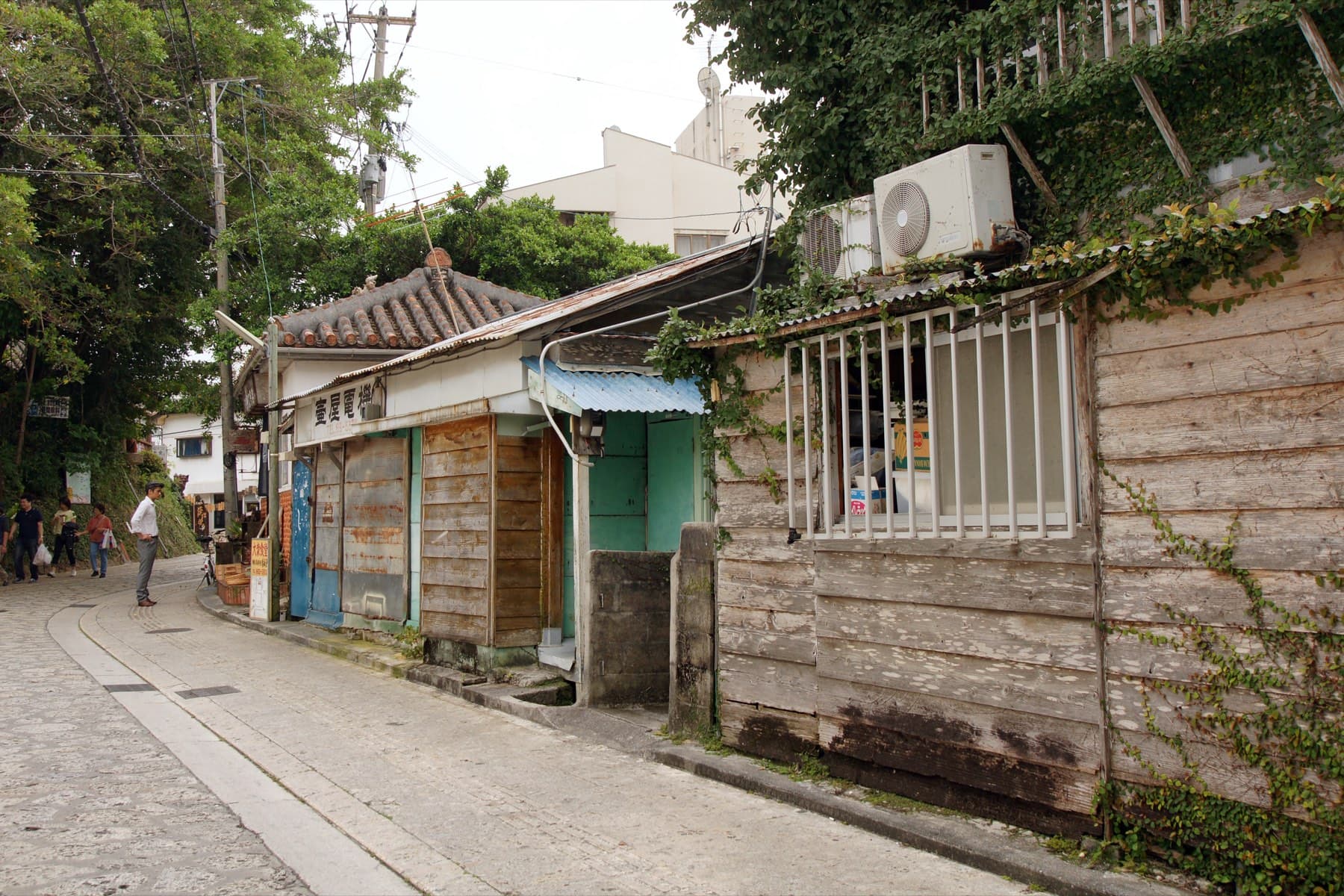
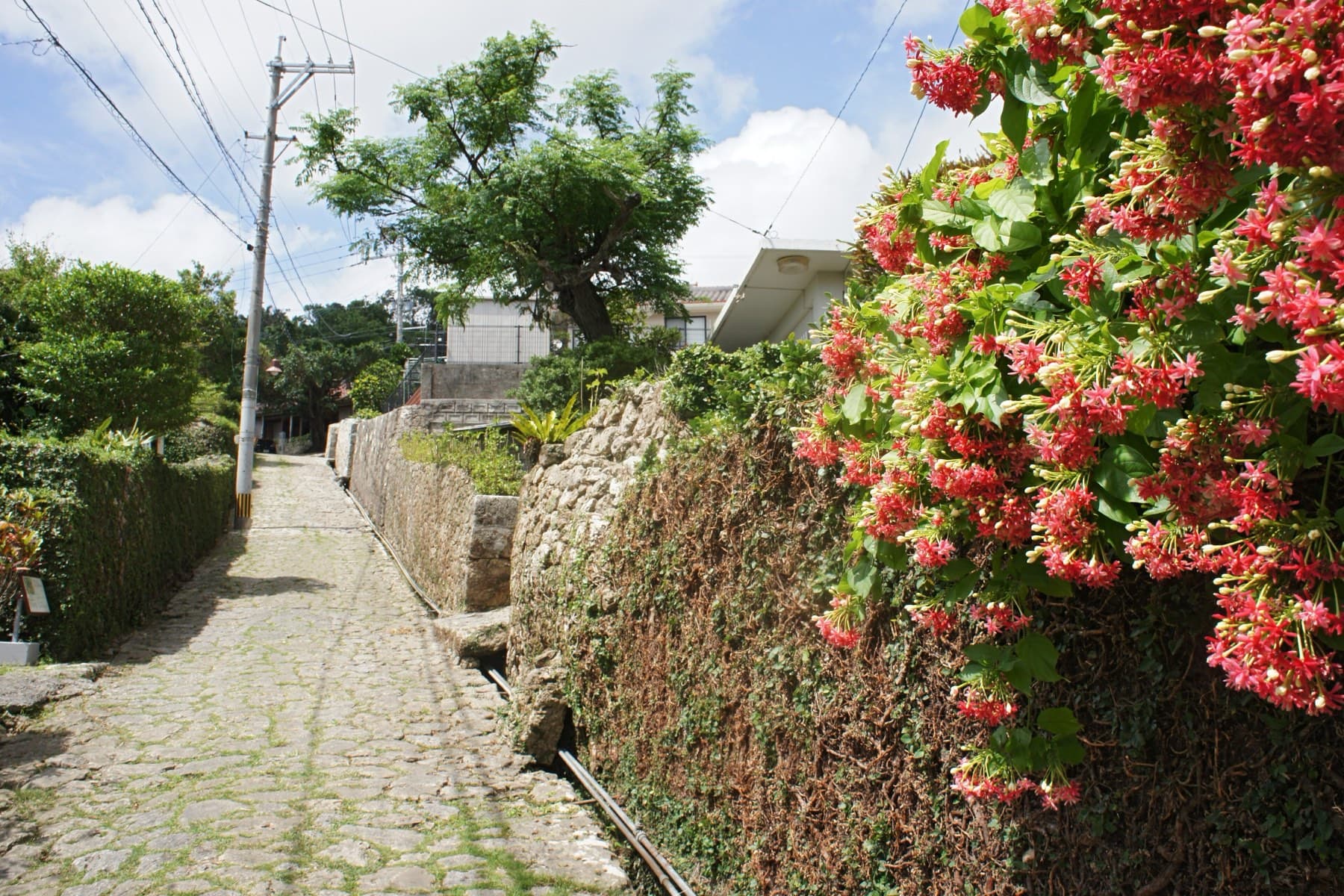
Tsuboya Yachimun Street in Naha is a 400 m lane paved with Ryukyu limestone where about 20 pottery workshops, shops and galleries carry on a craft that the royal government gathered here in 1682. The street is free to walk, and the Naha Municipal Tsuboya Pottery Museum on it is closed for renovation until 31 March 2027.
Photo 663highland · Wikimedia Commons · CC BY 2.5 and others, credited in the gallery
In 1682, under King Sho Tei, the royal government moved three kilns from Chibana in Misato, Takaraguchi in Shuri and Wakuta in Naha to the south of Makishi village, and the new pottery quarter took the name Tsuboya. Its potters made two kinds of ware. Arayachi is unglazed, and it went into big storage jars for awamori and water and into urns for the bones of the dead. Jooyachi carries glazes and painted decoration. The only arayachi kiln left in Tsuboya runs about 20 m up the slope under a red-tile roof, and the prefecture lists it as a tangible cultural property.
The Battle of Okinawa reduced old Naha to ash. Tsuboya on the edge of town escaped with less damage, so its stone-walled lanes survive. On 14 November 1945 an advance party of 140 potters and builders from the internment camps entered Tsuboya, and the first kilns fired that December. Within a month the district had 8,000 people, and Naha's postwar recovery began here. Among those potters was Jiro Kinjo, who later became Okinawa's first Living National Treasure.
The street itself runs about 400 m from the end of the Heiwa-dori arcade, and roughly 20 workshops, shops and galleries line it. The Tsuboya Pottery Museum explains Tsuboya ware on two floors with a film theatre, and it shows pieces by Kinjo and other masters. As Naha grew in the 1970s, smoke from the wood-fired kilns became a problem, and many potters moved their climbing kilns to Yomitan.
Where things stand
Naha City closed the Tsuboya Pottery Museum on 1 September 2026 to rebuild its exterior walls, with reopening set for 1 April 2027, so a February 2027 visit will find it shut.
Visiting with care
Tsuboya is a working pottery district and a residential neighbourhood, and its stone-walled lanes and kilns are protected cultural properties.
- The street is free to walk; the Tsuboya Pottery Museum charges adults ¥350 and admits university students and younger free
- The street is one-way for cars, and the museum has no car park, so use paid car parks nearby
- The old Arayachi climbing kiln is a prefectural cultural property; look from the lane and keep off it
- Ask before you photograph inside a workshop or a potter at work
- Handle pieces in shops with both hands and put them back where you found them
- Keep voices down in the side lanes, where people live behind the stone walls
Worth knowing
- The Tsuboya bus stop on routes 17, 30, 31, 55 and 112 sits at the street, and Makishi Station on the Yui Rail is about 15 minutes' walk.
- Come back after 1 April 2027 for the museum; in February 2027 the street and shops are open while the museum is closed.
- Tenbusu Naha on Kokusai-dori runs hands-on classes in Tsuboya ware.
Go and see
Where to see Tsuboya Yachimun Street場所


FAQ
Quick answers about Tsuboya Yachimun Streetよくある質問
Is the Tsuboya Pottery Museum open?
No. The Naha Municipal Tsuboya Pottery Museum is closed for renovation from 1 September 2026 to 31 March 2027 and reopens on 1 April 2027. Tsuboya Yachimun Street and its shops stay open.
What is yachimun?
Yachimun is the Okinawan word for pottery. Tsuboya ware divides into unglazed arayachi for jars and glazed, painted jooyachi for tableware.
How do you get to Tsuboya Yachimun Street?
Tsuboya Yachimun Street is about 15 minutes on foot from Makishi Station on the Yui Rail, or a short walk through the Heiwa-dori arcade from Kokusai-dori. The Tsuboya bus stop is beside the street.
Can you visit Tsuboya Yachimun Street?
Open to visitors. The street is free to walk; the Tsuboya Pottery Museum charges adults ¥350 and admits university students and younger free. The street is one-way for cars, and the museum has no car park, so use paid car parks nearby. The old Arayachi climbing kiln is a prefectural cultural property; look from the lane and keep off it.
What are the hours and entry fee at Tsuboya Yachimun Street?
Tsuboya Yachimun Street is open Shops and workshops set their own hours. Naha Municipal Tsuboya Pottery Museum 10:00–18:00 (last entry 17:30) when open and entry is free.
How should you behave at Tsuboya Yachimun Street?
At Tsuboya Yachimun Street: Ask before you photograph inside a workshop or a potter at work. Handle pieces in shops with both hands and put them back where you found them. Keep voices down in the side lanes, where people live behind the stone walls.
Within 6 km
See nearby見る






Within 6 km
Eat and drink nearby食
Within 6 km
Culture nearby文化




Book it
Line up the trip around Tsuboya Yachimun Street
Some of these links pay us a commission. It costs you nothing and keeps the guide independent.