guide · 6 min read
How do you eat at Makishi Public Market in Naha?
You buy fish or meat at a ground-floor stall in the rebuilt Daiichi Makishi Public Market and a restaurant upstairs cooks it for a separate charge. The covered arcades around the building hold the sweet shops and diners that make a morning of it.
By Ride Okinawa · Updated 2026-10
You buy a fish or a cut of pork at a stall on the ground floor of the Daiichi Makishi Public Market, and a restaurant on the second floor cooks it for you. The market calls this mochiage (持ち上げ, "carrying up"), and the Okinawa guide UMUI, researching in January 2026, found the cooking charge at ¥550 a person for up to three dishes, paid on top of the fish. The building trades 8:00–22:00 with a last mochiage order at 19:45, and it closes on the fourth Sunday of every month except December.
This guide draws on the market's own pages, Naha City's account of it in the Cabinet Office's Highlighting Japan, Ryukyu Shimpo's reporting and dated menus and reviews for the stalls nearby, all read in October 2026.
How does mochiage work?
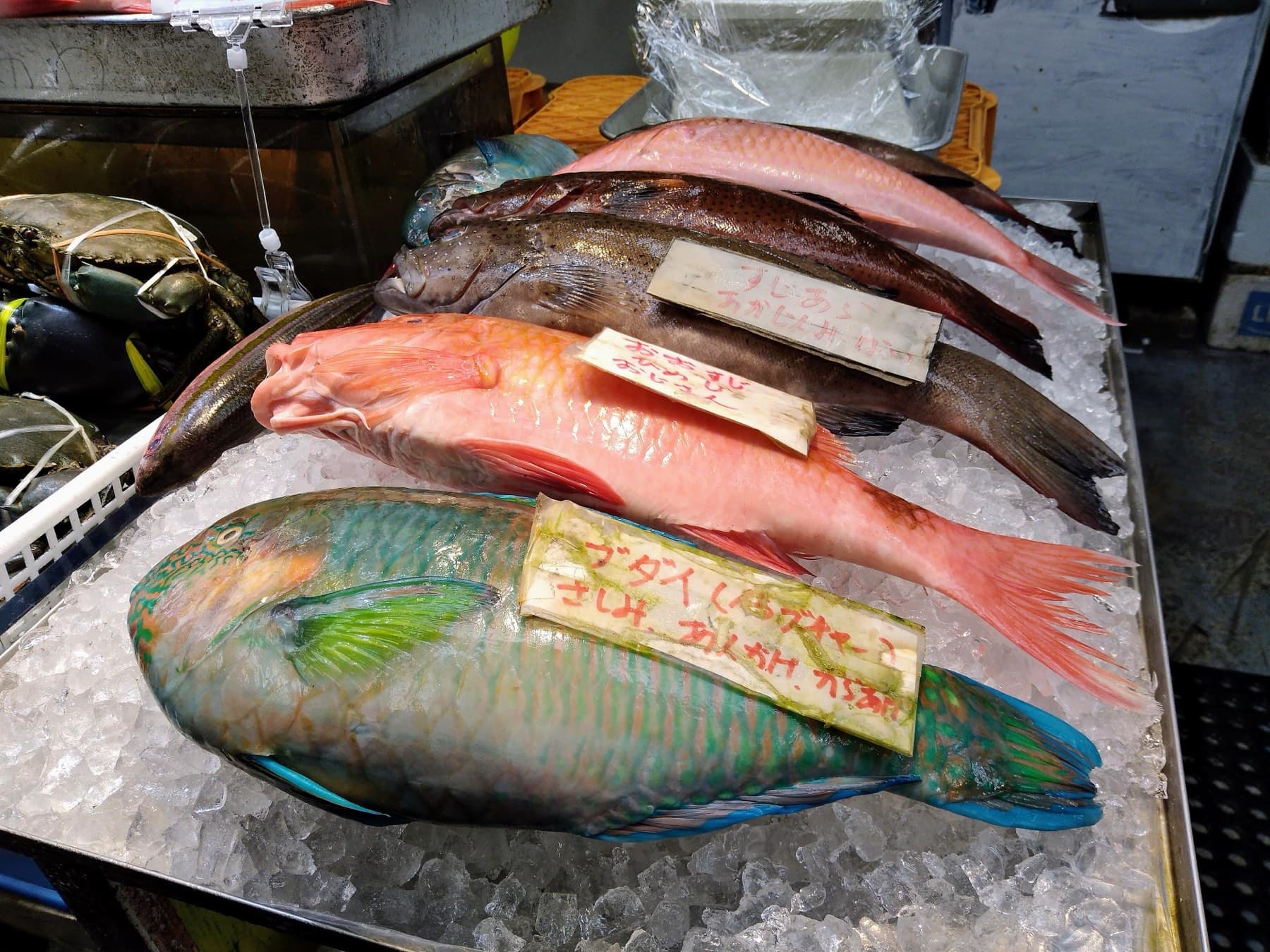
Pick your seafood or meat downstairs and pay the stall, then a restaurant upstairs cooks it and bills you for the cooking (market guide). Naha City's market office says the service began in 1990 and took its model from the food halls of Singapore and other Asian cities (Highlighting Japan, November 2025). The fish counters will tell you how to cook what you buy, and you can carry the answer straight upstairs. When Mapple's editors bought a parrotfish in 2025, the stall cleaned it and carried it up to the restaurant for them (Mapple). They ordered it as sashimi and as ankake, which brings the fish under a thick, glossy sauce. Read the handwritten labels on the ice for the Okinawan names, and look for irabuchaa if you want the blue parrotfish.
The market's own page says only that the charge depends on the dish. UMUI's guide, researched in January 2026, gives ¥550 a person for up to three items you bring up, ¥550 for each steak and ¥550 a person for shabu-shabu (UMUI, February 2026). Rakuten Travel quoted the same ¥550 for three dishes back in July 2023 (Rakuten Travel). Sashimi gets cut at the fish stall downstairs, and Rakuten Travel says it carries no cooking charge. Fish can come back fried as karaage, simmered in salt as maasu-ni, stir-fried in garlic butter or in a miso soup, and meat can become steak, yakiniku, shabu-shabu or a hamburg steak.
Ask the price before the knife comes out. A June 2026 Tabelog reviewer paid ¥2,500 for half a spiny lobster at a ground-floor stall before taking it up to be grilled (Tabelog).
What is in the new building?
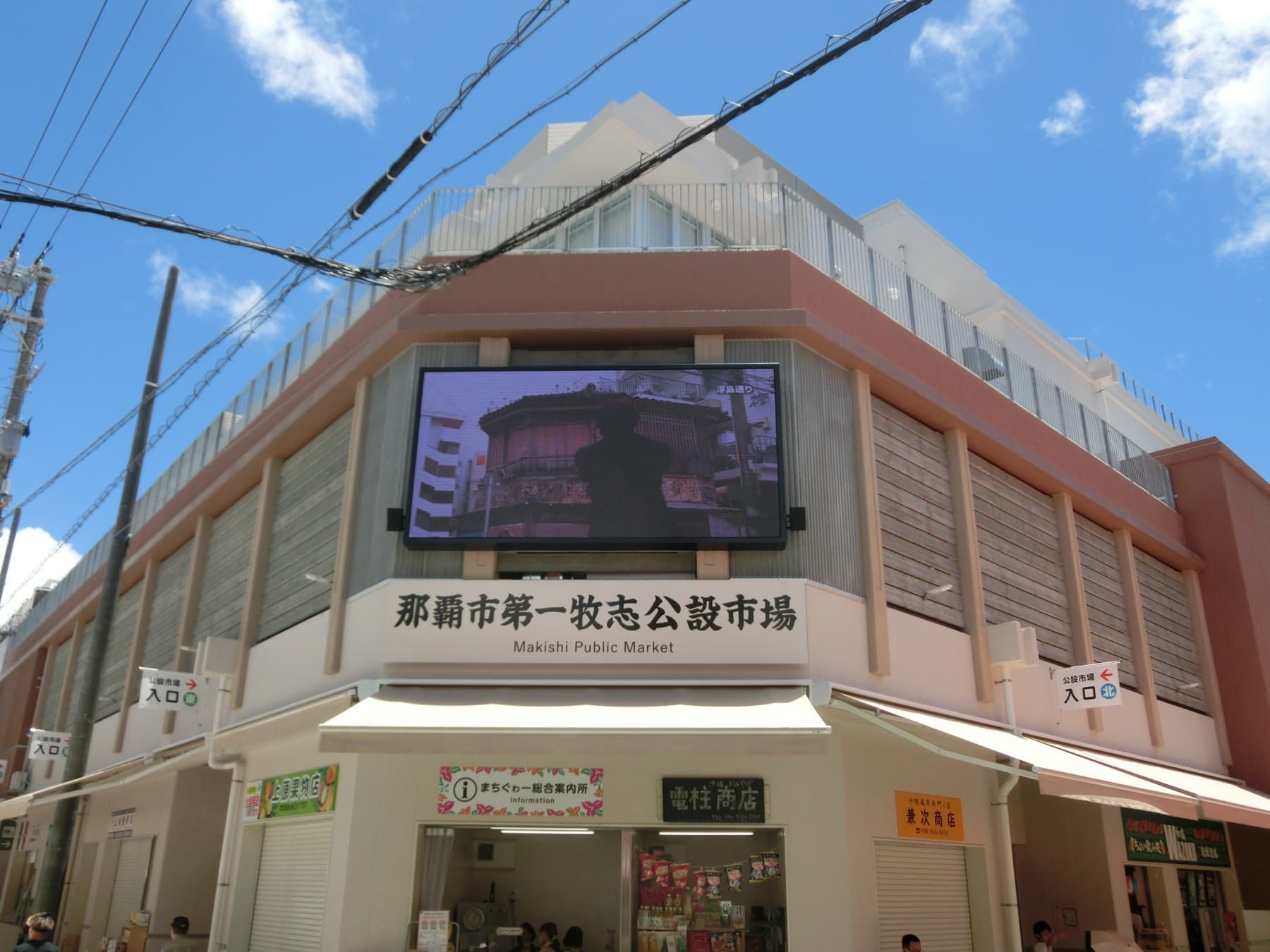
The Daiichi Makishi Public Market came back to its old site in a new building in March 2023, after nearly four years in a temporary hall (market guide). Naha City counts 75 shops on the ground floor selling fish, meat, vegetables, dried goods, awamori and souvenirs, and 12 on the second floor, where most of the shops serve food. The third floor holds a cooking classroom and a room for events (Highlighting Japan). The market's own directory listed 16 fishmongers and 12 butchers when we read it (shop list).
The market started as black-market stalls by the Kainan bus stop after the war. The city gathered them into a public market in December 1950 and rebuilt it in October 1972. In July 2019 the stalls moved out to the temporary hall (history). Stallholders still throw in a little extra now and then. Okinawans call it shiibun, and the city's market office counts it among the reasons people keep coming. The building has no car park. It does have barrier-free toilets and wheelchairs to borrow at no charge.
When is the market open, and when is it closed?
| Hours or dates | |
|---|---|
| Shops | 8:00–22:00, varying by shop |
| Last order for mochiage cooking (fish and meat) | 19:45 |
| Last order at the second-floor restaurants | 20:00 |
| Monthly closure | Fourth Sunday, except in December |
| New Year closures | 1–3 January, plus the first two days of the lunar new year |
| Obon closure | The two days after lunar Obon |
Source: the market's guide and how-to pages, read October 2026. Individual shops set extra days off of their own. By the calendar, the fourth Sunday of February 2027 falls on the 28th, so a late-February visit wants a Saturday or a weekday. Late morning on a weekday catches the fish counters at their fullest.

Where else should you eat in and around the market?
Start upstairs and work outward. Machigwa Shokudo Dotonbori cooks mochiage fish alongside its own Okinawan menu and takes cards. Upstairs too, Ayumi fries sata andagi from 11:00 until the batch runs out.
| Place | Where | What to order | Hours | Price and date |
|---|---|---|---|---|
| Machigwa Shokudo Dotonbori | Market, second floor | Your own fish, or mabo-don | 9:00–21:00 (last order 20:00); closed fourth Sunday | Mabo-don ¥900 (lunches.jp, June 2026) |
| Ayumi | Market, second floor | A bag of sata andagi | 11:00 until sold out; closed Wednesdays and Sundays; cash only | ¥750 a bag (Tabelog, May 2026) |
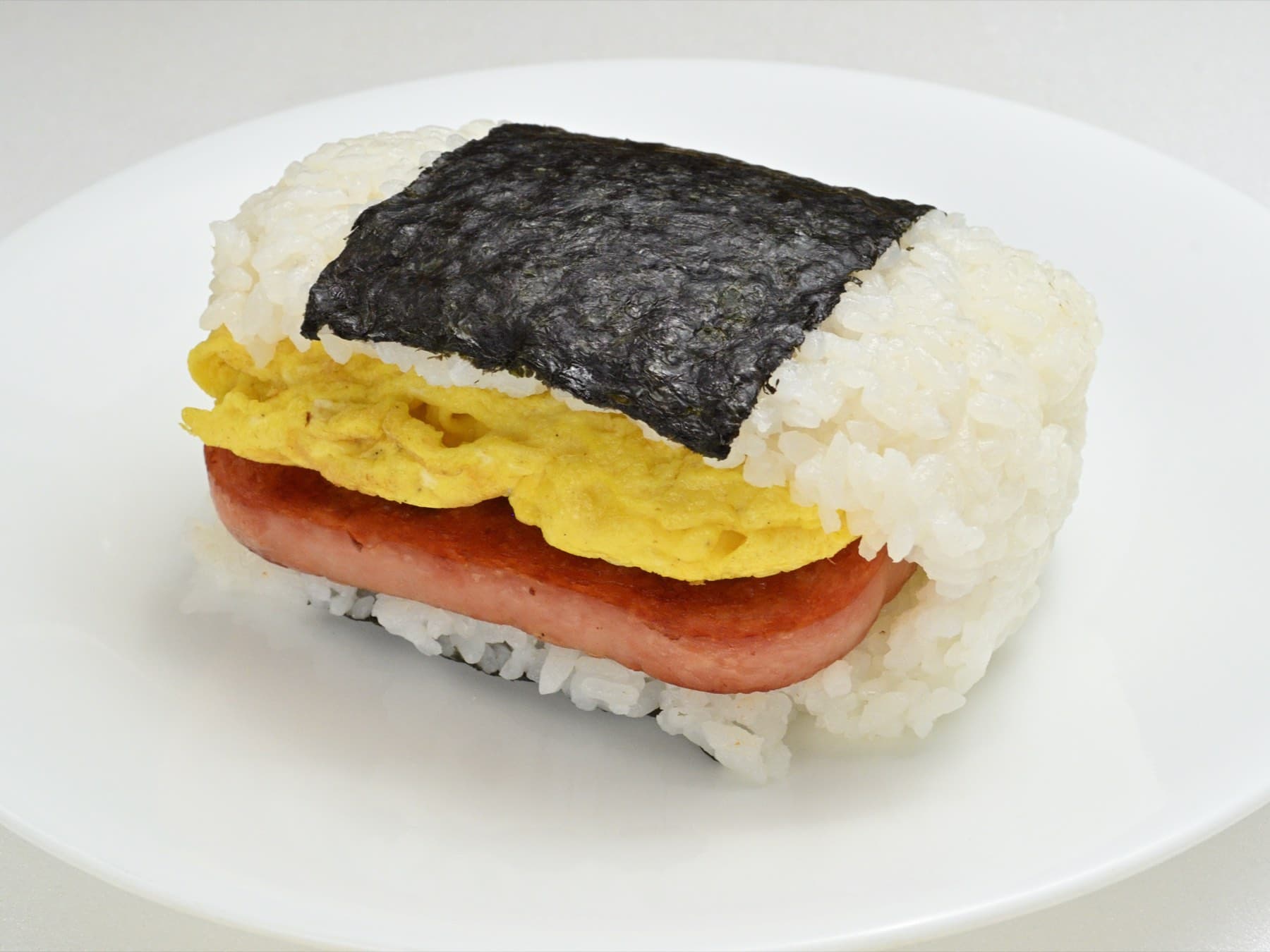
| Pork Tamago Onigiri | Matsuo, beside the market | Pork tamago | 7:00–20:00 daily | ¥450 (shop menu, May 2026) |
| Ryugu | Heiwa-dori arcade | Sata andagi fried in view | 10:30–18:00; closed third Thursday | From ¥150 each (shop menu, October 2026) |
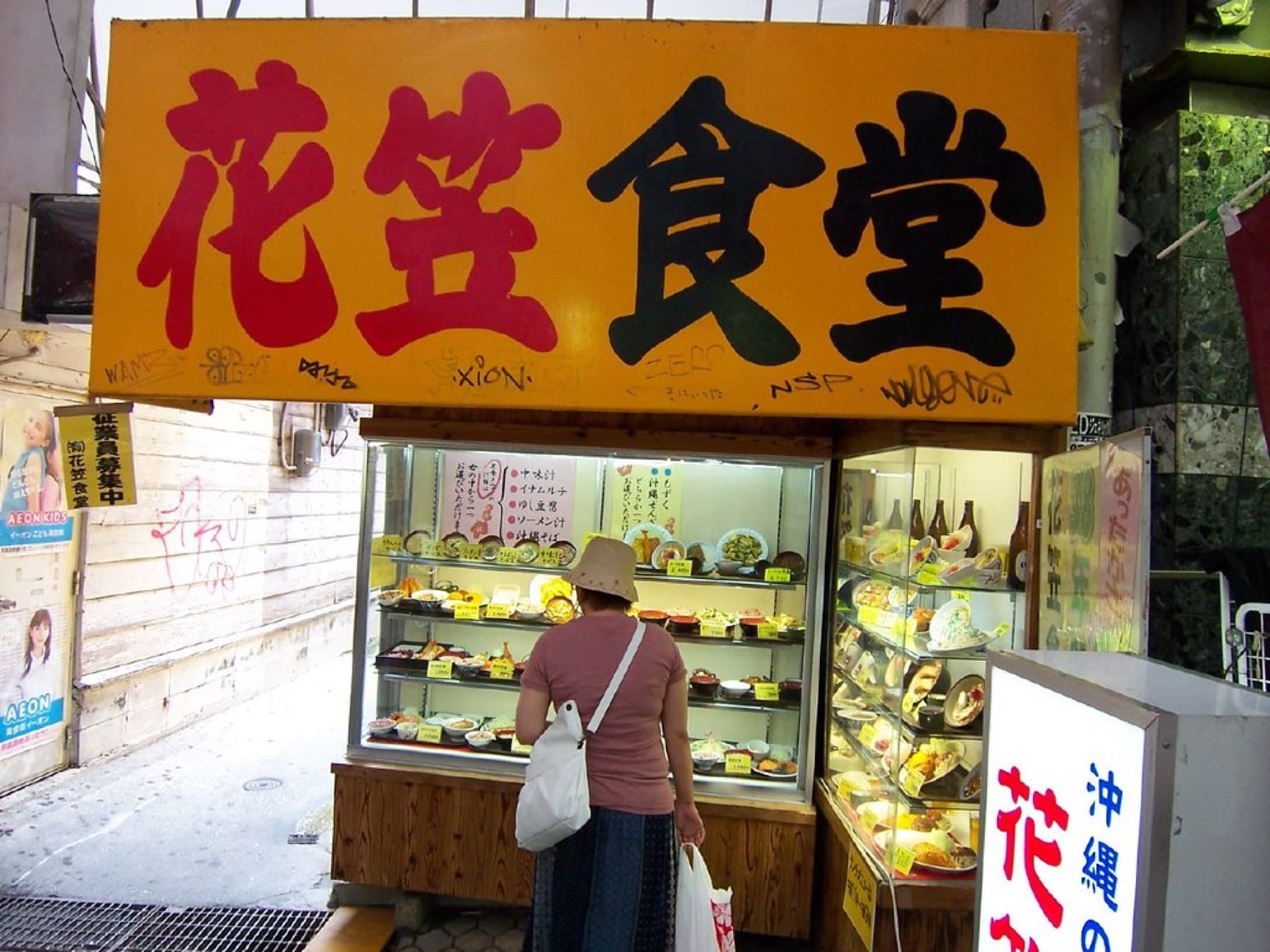
| Hanagasa Shokudo | Off Heiwa-dori | A set meal | 11:00–14:00; closed Thursdays; cash only | About ¥1,000–1,250 (Tabelog, 2026) |
| Mochi no Mise Yamaya | Suijo Tenpo building | Leaf-wrapped muuchii | 9:00–18:30 | Most spend under ¥999 (Tabelog) |
| Matsubara-ya Seika | Matsuo | Sata andagi and mochi | 9:00–20:00 daily | Most spent under ¥999 (Tabelog, 2026) |
For breakfast before a ride, the pork tamago onigiri counter opens at 7:00 and makes each one to order. Hanagasa serves lunch only, and it closes when the clock says 14:00. Ryugu and Ayumi make the same sweet two different ways, so buy one of each and settle the argument on a bench.
The map
Every place in this piece, on its island.
Contours from AWS Terrain Tiles; reefs and coast from OpenStreetMap.
How do you find your way through the arcades?
Walk in from Kokusai-dori near the Mutsumibashi junction, where Heiwa-dori and Ichiba-hondori turn off under their roofs and lead you to the market in a few minutes. The lanes branch and rejoin, and the market building sits in the middle of them. Heiwa-dori's arcade roof went up in 1981 at a cost of ¥130 million, and by 2018 it had aged enough that a committee of the city and the shopkeepers weighed taking it down (Ryukyu Shimpo, May 2018). It still shelters the shops today, and on a wet afternoon you can spend an hour under cover. If the rain sets in properly, Tenbusu Naha at the Makishi end of Kokusai-dori runs half-hour bingata dyeing classes upstairs from ¥1,650.
Keep going south on Heiwa-dori and the arcade ends where Tsuboya Yachimun Street begins. Its stone-paved lane of potteries runs for about 400 m. On Sundays from 12:00 to 18:00 Kokusai-dori itself closes to traffic, and you can wander across it without dodging buses.
Sight
Daiichi Makishi Public Market
The Daiichi Makishi Public Market in Naha is the city's fish and meat market, and since reopening in a new building in March 2023 it still lets you buy seafood on the ground floor and have it cooked upstairs for a separate fee.
- Kind
- Market
- Hours
- 8:00–22:00 (shops vary); 1F mochiage…

How do you get there by monorail or bike?
Take the Yui Rail to Makishi Station, about 9–10 minutes on foot, or to Miebashi, about 10 minutes (market guide). An adult ticket from Naha Airport to Makishi costs ¥320 (Yui Rail fares). On a bike, lock up on the edge of the arcades and walk in, because the market has no parking and Ukishima-dori beside it runs one way. The Makishi neighbourhood around it has cafés that open early, so the market makes a good meeting point before a ride north.
Quick answers
What is mochiage at Makishi Public Market?
Mochiage is the Daiichi Makishi Public Market's system for having your shopping cooked. You buy fish or meat from a ground-floor stall, and a second-floor restaurant cooks it and charges separately. UMUI's guide, researched in January 2026, put the charge at ¥550 a person for up to three dishes.
How much does it cost to have fish cooked at Makishi market?
Cooking at the Daiichi Makishi Public Market cost ¥550 a person for up to three items when UMUI checked in January 2026, and steak cost ¥550 a piece. The fish itself is paid for at the stall where you buy it. Sashimi is cut downstairs at the fish stall.
When is Makishi Public Market closed?
The Daiichi Makishi Public Market closes on the fourth Sunday of each month except December, on 1–3 January, on the first two days of the lunar new year and for two days after lunar Obon. Individual shops can take other days off.
What time is the last order for mochiage?
The last order for mochiage cooking at the Daiichi Makishi Public Market is 19:45, and the second-floor restaurants take their last orders at 20:00. The shops themselves trade from 8:00 to 22:00.
We write from operators’ and agencies’ own pages, open map data and published research, and we date every fact we check. How we research.
Sources (16)
- https://www.makishi-public-market.jp/about/howto/
- https://www.makishi-public-market.jp/about/guide/
- https://www.makishi-public-market.jp/about/history/
- https://www.makishi-public-market.jp/shop/
- https://www.gov-online.go.jp/hlj/ja/november_2025/november_2025-07.html
- https://media.umui-okinawa.co.jp/articles/2099/
- https://travel.rakuten.co.jp/mytrip/gourmet/makishipublicmarket-guide
- https://www.mapple.net/article/50808/
- https://ryukyushimpo.jp/news/entry-720891.html
- https://lunches.jp/south/dotonbori/
- https://tabelog.com/okinawa/A4701/A470101/47030202/
- https://tabelog.com/en/okinawa/A4701/A470101/47030204/
- https://porktamago.com/pdf/260508_PTO_webmenu.pdf
- https://ryugu.co.jp/shop-menu/
- https://tabelog.com/okinawa/A4701/A470101/47000192/
- https://www.yui-rail.co.jp/routemap/nahakuko/?t=fare
Related