guide · 10 min read
How does humpback whale season work in the Kerama Islands?
Humpback whales winter around the Kerama Islands from about late December to early April, and February sits in the busiest stretch of the season, with boats leaving Zamami, Tokashiki, Naha and Chatan whenever the north wind allows.
By Ride Okinawa · Updated 2026-10
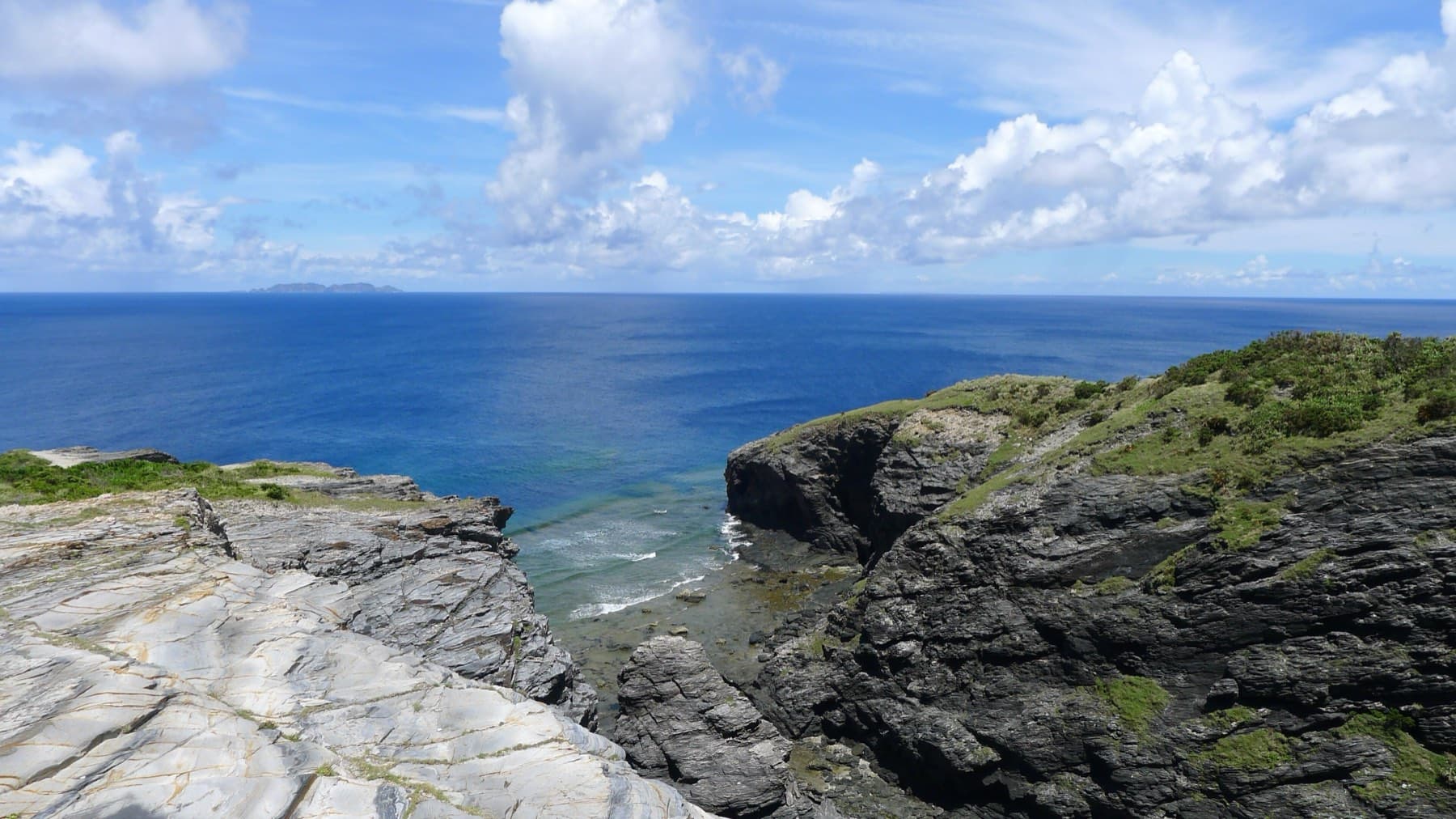
Humpback whales are in the sea around the Kerama Islands from about late December to early April, and February falls in the busiest part of their stay. Okinawa Churashima Foundation researchers who matched 21 years of fluke photographs found pairs and mating groups most often from late January to late February, and mothers with newborn calves grew more common from mid-February to late March (Churashima Foundation). The Zamami Whale Watching Association sailed from 8 January to 25 March in 2026 and charged ¥7,700 an adult, and the boats out of Naha and Chatan run a longer season. The rules that Zamami and Tokashiki set for their own waters forbid anyone to get in the water with a whale.
We built this from the two village associations' pages, the village ferry timetables, the operators' published prices and the Churashima Foundation's research, all read in October 2026. Neither association had posted its 2027 dates by then, so treat every village season below as 2026's unless the line says otherwise.
Which whale boat suits your trip?
| Leaves from | Who runs it | Season | Trip | Adult fare | Worth knowing |
|---|---|---|---|---|---|
| Zamami Port | Zamami Whale Watching Association, nine member boats | 8 January to 25 March 2026 | 1–2 hours, morning and afternoon | ¥7,700 plus a ¥600 whale-search fee (2026) | Spotters on the island's lookouts guide the boats by radio |
| Tokashiki Port | Tokashiki Whale Watching Association, thirteen member boats | 24 January to 8 March 2026 | 2 hours, one morning sailing | ¥8,000 before tax (2026) | Day-trippers have to arrive on the 9:00 Marine Liner |
| Naha, Miegusuku Port | Cerulean Blue | 19 December 2026 to 4 April 2027 | 3 hours | From ¥5,000 | Refund or a free second trip if nobody sees a whale, 1 February to 15 March 2027 |
| Naha | Marine Club Berry | 19 December 2026 to 31 March 2027 | About 4 hours | From ¥5,000 | Full refund if nobody aboard sees a whale, a dolphin or a blow, 1 February to 31 March 2027 |
| Naha, Miegusuku Port | Total Marine Spot NEWS | 20 December 2025 to 5 April 2026 last season | About 3.5 hours | From ¥6,000 (2025–26) | Catamaran with two sailings a day and a six-passenger minimum |
| Chatan | Island Message | Winter; the listing gives no dates | About 3 hours | ¥7,500 | Sails only with 10 or more booked |
From Zamami the watching grounds sit close to shore, and the association says the short run keeps seasickness down. Cerulean Blue's boats head west from Naha for about 40 km toward the waters off Zamami, so more of a three-hour trip goes on the crossing. On Island Message's morning out of Chatan the boat sails at 9:00 and the watching usually starts around 11:00.
When do the humpbacks come to the Keramas?
Humpbacks spend the summer feeding in cold water off Russia and Alaska, then swim south each winter to breed and raise calves in warm seas like Okinawa's (Zamami Whale Watching Association). The association says many females come back here to give birth after a pregnancy of about a year. Over more than 30 years of surveys the Churashima Foundation has photographed and told apart about 2,000 individual whales around the Keramas and the Motobu Peninsula, by its 2024 count (Churashima Foundation).
The edges of the season move. The Ryukyu Shimpo reported the first whale of the 2024–25 winter on 24 November and a newborn calf on 30 November, and it called that calf the earliest the association had confirmed in 33 years (Ryukyu Shimpo). During the 2026 season the association posted that few whales were about. A trip in the second half of February sits inside both of the foundation's windows, since the mating peak runs to late February and the calves start to arrive from the middle of the month.
How does a whale trip from Zamami work?
Each morning in season, spotters stand on Zamami's lookouts to search for blows and talk the captains in by radio, so the boats run straight to the whales (Ministry of the Environment). The association has worked this way since 1991. Its standard 2026 fare was ¥7,700 for an adult and ¥3,850 for a child, and the ¥600 whale-search fee on top pays for protection and research (tour page). Each of the nine member boats may set its own price.
Since January 2024 you book with a member shop directly, by phone, and the association's reservation page lists every boat with its number. Book by the day before at the latest. Two of the boats take bookings in English. Dive Center No-Y sails its boat Venus for two to two and a half hours from January to the end of March at its own price of ¥6,600 an adult. Nature Land Kayaks has published its own 2027 season, 8 January to 28 March, with departures at 10:15 and 13:15 for ¥7,700, and it carries a hydrophone so you can hear the humpbacks sing. Both shops put their sighting rates above 90%, and those are their own figures. A Japan Tourism Agency guide gives the Kerama boats a 90% rate, and the association publishes no season log that we could find.
The deck gets cold in a February wind. No-Y tells winter guests to bring a waterproof jacket, and the association suggests taking a seasickness tablet before you board if you need one.
What rules keep the boats back and everyone out of the water?
The rules cover the sea within 10 miles (18 km) of Zamami's islands and within 7 km of Tokashiki's, and they bind every craft on it, from yachts and sabani to kayaks and paddleboards (whale-watching rules). A boat slows down inside 300 m of a whale. Inside 100 m it may not approach at all, and when a whale comes closer on its own the boat stops and waits for it to leave. One whale or one pod gets two hours of watching at most. The fleet as a whole may spend one hour with a mother and calf in the morning and one hour in the afternoon, so a trip that finds only a mother and calf can come back after about an hour. Inner bays around Zamami and Tokashiki are set aside as nurseries where whale-watching boats don't go.
Swimming with whales is banned, and so are diving and snorkelling and any other way of getting into the water to watch them. Underwater filming is banned too, with one exception: when a whale comes up to the boat by itself, you may lower a camera gently over the side. Nobody plays whale calls into the water. If you take a kayak or a paddleboard out from Zamami in February, the same distances apply to you.
Can you go whale watching on a day trip from Naha?
Yes. Tokashiki is the tightest connection. The Marine Liner Tokashiki leaves Tomari's north pier at 9:00 and lands at 9:40, and it is the only boat that reaches the island in time for the association's 10:00 sailing; the 10:00 car ferry arrives too late (Tokashiki Whale Watching Association). The association needs your booking by 18:00 the day before. In winter the last Marine Liner back leaves Tokashiki at 17:00, and the one-way fare rose to ¥3,300 on 1 October 2026. The association says a boat that sails meets whales every time, which is its own claim.
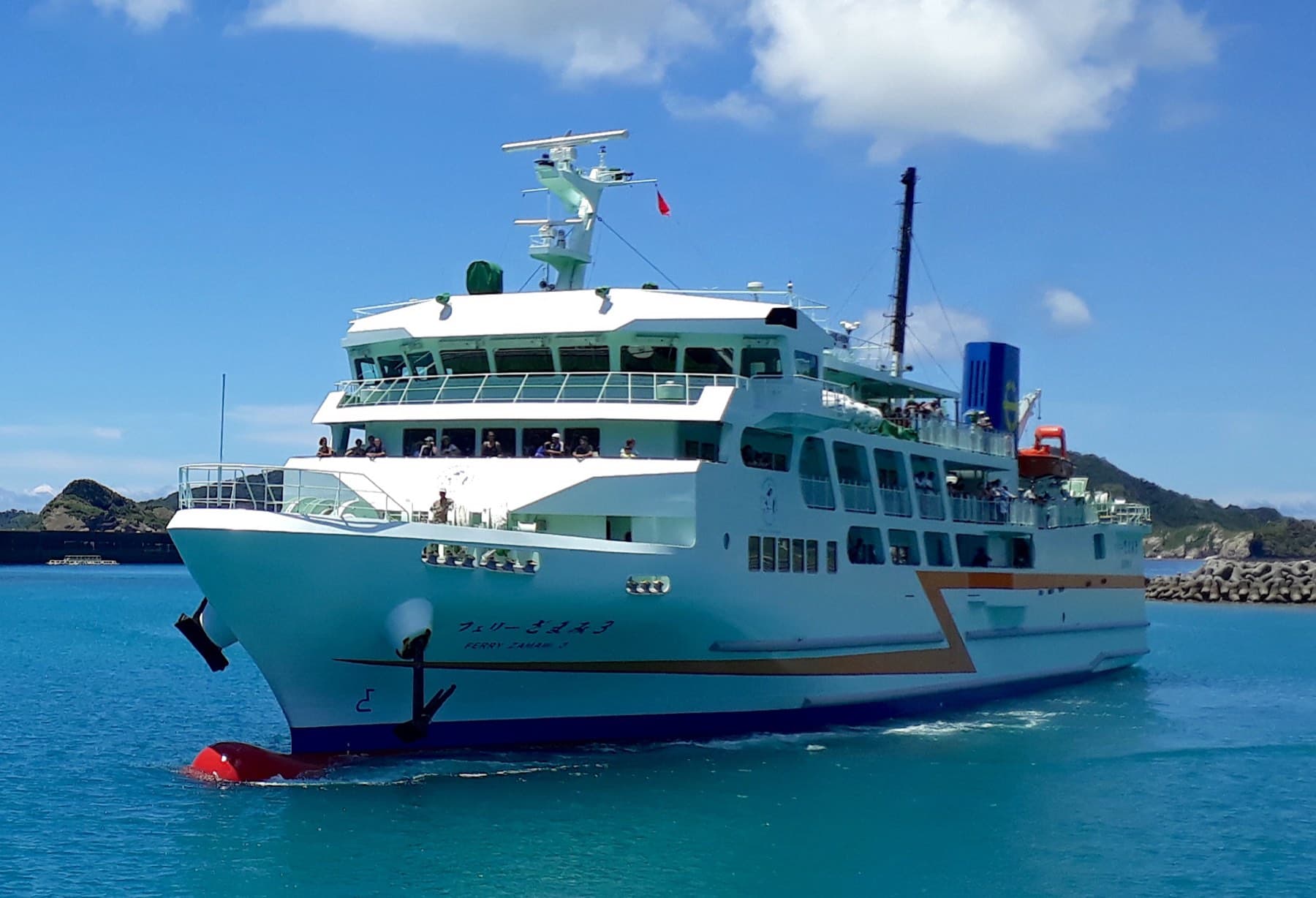
On the December 2026 and January 2027 timetables the Queen Zamami 3 leaves Tomari at 9:00 and reaches Zamami at 9:50, and the afternoon boat leaves Zamami at 16:10 and docks in Naha at 17:10. Zamami Village publishes timetables month by month, and February 2027's was not out in October 2026. No-Y says its whale trips are short enough to fit a day trip on the Queen. The high-speed fare is ¥3,950 one way or ¥7,510 return from Naha, and everyone landing on Zamami pays the village's ¥100 Churashima tax.
The Naha boats save the ferry altogether. Cerulean Blue's morning boat meets at the Miegusuku Port waiting room at 8:30, and port parking costs ¥700 for the day. If you book before 15:00 the day before, its free shuttle collects guests from Naha hotels for the 9:00 and 13:45 departures while seats last.
What does a February day on Zamami look like?
JMA keeps no weather station on Zamami-jima. The nearest one in the Keramas stands 220 m up on Tokashiki, where the 1991–2020 normals give February a high of 18.1 °C and a low of 13.8 °C, and by our comparison that hilltop runs 1.6 to 1.9 °C cooler than Naha (JMA, Tokashiki). Naha averages 20.2 °C by day and 15.1 °C by night in February. The wind at Tokashiki blows from due north most often, at a mean of 4.9 m/s, and the day's strongest gust reaches 10 m/s on five or six days a month through the winter. The sea sits at about 22 °C, and our riding climate page has the rest of the winter figures.
Take the morning whale boat and come back to the port for lunch. The Zamami Fisheries Co-op Store sells bowls of marlin, squid and tuna a minute from the ferry and shuts once the fish runs out. Wayama Mozuku, three minutes along the shore, kneads mozuku seaweed into its Okinawa soba and serves it hot all year.
After lunch, pick up an e-bike. GREEN RIDE OKINAWA keeps app-run stations on Zamami, and Rental Ishikawa rents bicycles and e-bikes for cash. The road to Takatsuki-yama Observatory climbs steeply out of the village to a deck about 137 m above the sea, and the Ministry of the Environment points whale watchers to its second level. Inazaki Observatory sits on the north coast about 3.1 km from the port by road. The spotters work from it and it takes the north wind full on, so carry a windproof layer. Furuzamami Beach lies 1.4 km east of the port and faces south toward Tokashiki, out of the wind. Its showers and rentals close after summer, and nobody lifeguards it in winter. On Ama Beach to the west, sea turtles feed close to shore and the campground switches on hot showers in the cold months.
Dinner in the village needs a booking. Santa sets out island fish as sashimi with a longer sake list than most bars here, and it closes on Thursdays. Reviewers book Ao no Umi for its nakami-irichi and squid sashimi on any night but Monday. Little Kitchen closes on Wednesdays and fills up on the others. Bring cash from Naha. The tourism association says many shops take nothing else and the island's ATMs may be unavailable at night and on holidays (Zamami Village Tourism Association). Zamami has no convenience store, and the clinic closes at weekends. For a bed near the boats, Pension Cha Villa sits a minute's walk from the port, and Minshuku Robinson is in the quiet village of Ama near the beach.
What happens when the north wind keeps the boats in?
Zamami Village stops the Queen Zamami 3 when 15 m/s of wind or 3.0 m waves are forecast on the crossing, and the slower Ferry Zamami 3 when 17 m/s or 4.0 m are forecast (Zamami Village timetables). Tokashiki Village posts its sailing status at 8:00 each morning, and a cancelled outbound boat cancels your return booking with it. The Tokashiki whale captains also decide by 8:00 whether to sail, and rain can stop them when the spotters can't see from the hills.
No-Y advises booking the whale trip early in your Okinawa stay so a cancelled day can roll to the next one. If you are already on Zamami when the boats stay in, the Ministry of the Environment suggests searching for blows from the lookouts with binoculars. Cafe Yukuruya inside the port building opens from 9:00 to 16:45, and it is where people wait out a delayed ferry.
Quick answers
When is whale watching season in the Kerama Islands?
Humpback whales are around the Kerama Islands from about late December to early April. The Zamami Whale Watching Association ran its 2026 tours from 8 January to 25 March, and the Tokashiki association from 24 January to 8 March. Okinawa Churashima Foundation research puts the mating peak between late January and late February.
Can you swim with whales in Okinawa's Kerama Islands?
No. The whale-watching rules for the sea within 10 miles (18 km) of Zamami's islands and 7 km of Tokashiki's ban swimming, snorkelling and diving with whales. Boats must also stay at least 100 m from a whale unless the whale comes to them.
How much does whale watching on Zamami cost?
The Zamami Whale Watching Association's 2026 fare was ¥7,700 for an adult and ¥3,850 for a child, plus a ¥600 whale-search fee for protection and research. Member boats can set their own prices, and Dive Center No-Y charges ¥6,600 an adult on its own boat. Trips last about one to two hours.
Can you see whales on a day trip from Naha?
Yes. Cerulean Blue and Marine Club Berry run three- to four-hour whale trips from Naha between 19 December 2026 and early April 2027. A Tokashiki day trip works too if you take the 9:00 Marine Liner Tokashiki from Tomari, which lands in time for the island association's 10:00 sailing.
Is late February a good time for whale watching in Okinawa?
Yes. Okinawa Churashima Foundation research found mating groups most often from late January to late February and mothers with newborn calves building from mid-February to late March. The north wind can still keep the Kerama boats in port on some February days, so leave a spare day.
We write from operators’ and agencies’ own pages, open map data and published research, and we date every fact we check. How we research.
Sources (23)
- https://zwwa.okinawa/
- https://zwwa.okinawa/tour/
- https://zwwa.okinawa/reservation/
- https://zwwa.okinawa/humpback_whale/
- https://zwwa.okinawa/whale_watching/rule/
- https://www.wwtokashiki.jp/
- https://churashima.okinawa/ocrc/marine_organisms/humpback_whale/
- https://churashima.okinawa/userfiles/files/topics/pressrelease/160706_nr.pdf
- https://www.env.go.jp/nature/nationalparks/list/kerama-shoto/spot/
- https://www.vill.zamami.okinawa.jp/sempaku/ryokin_jikoku/
- https://www.vill.zamami.okinawa.jp/ship/
- https://www.vill.tokashiki.okinawa.jp/sempakujoho/3027.html
- https://www.zamamitourism.com/prepare
- https://www.okinawastory.jp/event/600022857
- https://ryukyushimpo.jp/news/region/entry-3750463.html
- https://www.mlit.go.jp/tagengo-db/common/001556067.pdf
- https://kerama-zamami.com/whale-watching
- http://okinawakayak.jp/menu.html
- https://www.cerulean-blue.co.jp/en/whalewatching
- https://www.berry7.com/lang/en/naha-whale
- https://www.otsinternational.jp/otsoption/en/marine/Whalewatching/3821/
- https://www.data.jma.go.jp/stats/etrn/view/nml_amd_ym.php?prec_no=91&block_no=1152&year=&month=&day=&view=
- https://www.data.jma.go.jp/stats/etrn/view/nml_sfc_ym.php?prec_no=91&block_no=47936&year=&month=&day=&view=
Related
Places in this piece関連
Kerama humpback whale season
Kerama
Event
Zamami Whale Watching Association
Zamami Village · Zamami-jima
Operator
Tokashiki Whale Watching Association
Tokashiki Village · Tokashiki-jima
Operator
Tomari Port to Zamami
Kerama
Getting around

Tomari Port to Tokashiki
Kerama
Getting around


Zamami-jima
Kerama
Island
Inazaki Observatory
Zamami Village · Zamami-jima
Sight


Furuzamami Beach
Zamami Village · Zamami-jima
Beach